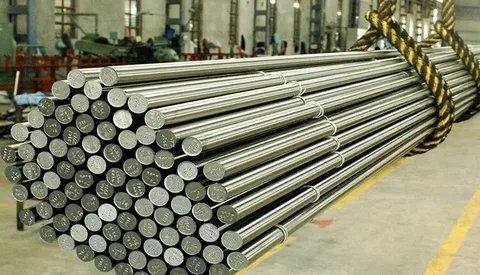
Carbon Steel Round Bars Manufacturers and Exporters
Carbon Steel Round Bars, ASTM A105 Carbon Steel Round Bars , Carbon Steel Forged Bars Exporter, Carbon Steel Square Bar, Carbon Steel Round Bar, Suppliers of Carbon Steel Hex Bar, Carbon Steel Round Bars Manufacturer in India.
Carbon Steel Round Bars, which contain a small amount of incidental elements left over from steelmaking. We also offer the same in different grades and specifications such as Carbon Steel Round Bars, Carbon Steel Round Bars, Carbon Steel Round Bars, Carbon Steel Round Bars, and EN SERIES Carbon Steel Round Bars. To change the properties of Carbon Steel Square Bars is by adding alloying elements other than carbon that produce characteristics not achievable in plain carbon steel. Each of the approximately 20 elements used for Carbon Steel Flat Bars has a distinct influence on microstructure and on the temperature, holding time, and cooling rates at which microstructures change. We are one of the pioneer stockiest and exporter for high quality Carbon Steel Threaded Bars, which alter the transformation points between ferrite and austenite, modify solution and diffusion rates, and compete with other elements in forming intermetallic compounds such as carbides and nitrides. There is a huge amount of empirical information on how alloying in Carbon Steel Hollow Bars affects heat – treatment conditions, microstructures, and properties. In addition, there is a good theoretical understanding of principles, which, with the help of computers, enables engineers to predict the microstructures and properties of Carbon Steel Hexagonal Bars when alloying, hot – rolling, heat – treating, and cold – forming in any way.
Features of Carbon Steel Round Bars :-
| High strength | Resistance against corrosion |
| Resistance against High pressure | Resistance against High temperature |
| Resistance against Dimensions stability | Longer service life |
| Resistance against High mechanical stress | |
Specifications of Carbon Steel Round Bars:-
| Specifications | ASTM A105, ASME SA105 |
|---|---|
| Dimensions | EN, DIN, JIS, ASTM, BS, ASME, AISI |
| Carbon Steel A105 Round Bars | 3.0 – 50.8 mm, Over 50.8 – 300mm |
| Carbon Steel Rectangular Bars | 6.35 x 12.7mm,6.35 x 25.4mm,12.7 x 25.4mm |
| Carbon Steel Hex Bars | AF5.8mm–17mm |
| Carbon Steel Square Bars | AF2mm – 14mm, AF6.35mm,9.5mm,12.7mm, 15.98mm,19.0mm, 25.4mm |
| Carbon Steel Flat Bars | 1/2” to 10” in thickness range of 2mm to 150mm |
| Finish | Bright, Polish & Black |
| Length | 1 to 6 Meters, Custom Cut Lengths. |
| Form | Round, Square, Hex (A/F), Rectangle, Billet, Ingot, Forging Etc |
Types of Carbon Steel Round Bars :-
| Sr.no | Product | Types |
|---|---|---|
| 1 | Carbon Steel Bright Bar | Carbon Steel Bright Bar CS Bright Bar Carbon Bright Bar |
| 2 | Carbon Steel Hex Bar | Carbon Steel Hex Bar CS Hexagonal Bar Carbon Hex Bar. |
| 3 | Carbon Steel Square Bar | Carbon Steel Square Bar Carbon Square Bars CS Square Bar |
| 4 | Carbon Steel Rectangular Bar | Carbon Steel Rectangular Bar Carbon Rectangular Bars CS Rectangular Bar |
| 5 | Carbon Steel Flat Bars | Carbon Steel Flat Bars Carbon Flat Bars CS Flat Bars |
| 6 | Carbon Steel Polished Bar | Carbon Polished Bar CS Polished Bars Carbon Steel Polished Bar |
Other Grades of Carbon Steel Round Bar:-
- Carbon Steel A105 Round Bar
- Carbon Steel A350 LF2 Round Bar
- Carbon Steel AISI 1018 Round Bar
- Carbon Steel AISI 1045 Round Bar
- Carbon Steel En Series Round Bar
Arham Alloys: Distinguished Carbon Steel Round Bar Manufacturers Setting Metallurgical Standards in India
In the precision-driven landscape of modern manufacturing where component quality determines product success, the selection of raw materials represents a critical decision point influencing everything from machinability to service life. Arham Alloys has emerged as a distinguished force among carbon steel round bar manufacturers, delivering comprehensive solutions that combine metallurgical excellence with dimensional precision. As trusted carbon steel round bar suppliers, we provide ASTM A105 carbon steel round bars, carbon steel forged bars, carbon steel square bars, and carbon steel hex bars serving diverse industries throughout Mumbai, India, and global markets.
Metallurgical Foundations: Understanding What Defines Carbon Steel Round Bar Quality
Carbon steel round bars contain a small amount of incidental elements left over from steelmaking, representing the purest form of iron-carbon alloys where carbon content primarily determines mechanical properties. This fundamental composition creates a material system where strength, hardness, and ductility can be precisely controlled through carbon content adjustment and thermal processing. Understanding these metallurgical foundations enables intelligent material selection that balances performance requirements with manufacturing economics.
The inherent versatility of carbon steel round bar stems from the iron-carbon phase diagram, where varying carbon content and thermal treatments produce dramatically different microstructures and properties. From soft, ductile low-carbon grades ideal for cold forming to hard, strong high-carbon variants suitable for tooling and wear applications, this material system accommodates an extraordinary range of engineering requirements through composition and processing control.
Comprehensive Carbon Steel Round Bar Grades: Matching Material to Application
We offer the same in different carbon steel round bar grades and specifications including various ASTM designations, SAE grades, and EN series carbon steel round bars. This comprehensive grade availability ensures that engineers can specify precisely the composition and properties required for their specific applications, whether demanding maximum strength, optimal machinability, superior weldability, or specialized characteristics.
ASTM A105 represents a widely specified grade for forged carbon steel piping components and general engineering applications where moderate strength and good weldability are required. This standard carbon steel round bar grade serves in applications from valve stems to machinery components where reliable performance and reasonable cost create optimal value. The controlled chemical composition ensures predictable mechanical properties and consistent heat treatment response across production batches.
Low Carbon Steel Round Bar: Formability and Weldability Champions
Low carbon steel round bar products, typically containing less than 0.30% carbon, excel in applications requiring extensive cold working, complex forming, or frequent welding. The reduced carbon content provides the ductility necessary for operations like wire drawing, cold heading, and deep drawing without risk of cracking or work hardening to unacceptable levels. These grades machine efficiently with appropriate tooling and produce excellent weld quality with minimal preheating requirements.
Manufacturing sectors producing fasteners, wire products, and cold-formed components rely heavily on low carbon steel round bar for its balance of formability, strength, and cost-effectiveness. Automotive industries utilize low-carbon grades for numerous components where moderate strength suffices and fabrication efficiency drives material selection. The excellent surface finish achievable through cold drawing makes low-carbon round bars attractive for visible applications and components requiring minimal post-machining.
High Carbon Steel Round Bar: Strength and Wear Resistance Leaders
High carbon steel round bar variants, containing 0.60% to 1.00% carbon, deliver exceptional strength and wear resistance essential for demanding applications. To change the properties of carbon steel square bars and achieve these enhanced characteristics, higher carbon content creates harder microstructures capable of withstanding significant contact stresses and abrasive conditions. These grades serve in manufacturing cutting tools, springs, wear plates, and components requiring maximum hardness.
The transformation of high carbon steel round bar through heat treatment enables dramatic property modifications. Hardening through austenitizing and quenching produces martensitic microstructures with hardness levels approaching those of tool steels. Subsequent tempering adjusts hardness-toughness balance for specific applications. This thermal processing versatility makes high-carbon grades adaptable to diverse service requirements from spring manufacture to agricultural implement components.
Alloying Intelligence: How Elements Beyond Carbon Transform Performance
By adding alloying elements other than carbon, manufacturers produce characteristics not achievable in plain carbon steel. Each of the approximately 20 elements used for carbon steel flat bars has a distinct influence on microstructure and on the temperature, holding time, and cooling rates at which microstructures change. This metallurgical complexity enables property customization impossible with simple carbon content adjustment alone.
Manganese additions improve hardenability and strength while maintaining reasonable ductility. Silicon functions as a deoxidizer while enhancing strength and electrical resistivity. Chromium improves hardenability and provides modest corrosion resistance. Molybdenum enhances high-temperature strength and creep resistance. Nickel improves toughness, particularly at low temperatures. The systematic use of these alloying additions transforms carbon steel round bar from a commodity material into an engineered product capable of meeting exacting specifications.
Microstructural Control: The Science Behind Predictable Properties
We are one of the pioneer stockists and exporters for high-quality carbon steel threaded bars, which alter the transformation points between ferrite and austenite, modify solution and diffusion rates, and compete with other elements in forming intermetallic compounds such as carbides and nitrides. This microstructural engineering represents sophisticated metallurgical control where processing parameters determine final properties with scientific precision.
There is a huge amount of empirical information on how alloying in carbon steel hollow bars affects heat-treatment conditions, microstructures, and properties. This accumulated knowledge, combined with modern computational tools, enables prediction of carbon steel round bar performance under various processing conditions. The ability to model microstructural evolution during hot rolling, heat treatment, and cold forming allows optimization of manufacturing processes for specific property targets.
In addition, there is good theoretical understanding of principles which, with the help of computers, enables engineers to predict the microstructures and properties of carbon steel hexagonal bars when alloying, hot-rolling, heat-treating, and cold-forming in any way. This predictive capability transforms material specification from educated guesswork into engineered certainty, reducing development time and ensuring consistent product performance.
Diverse Geometries: Beyond Standard Round Bar Configurations
While round bars represent the most common geometry, our comprehensive portfolio includes carbon steel square bars for applications requiring non-rotating members or specific bearing surfaces, carbon steel flat bars for springs and structural elements, carbon steel hex bars providing anti-rotation features and wrench engagement surfaces, carbon steel threaded bars for fastener production and structural connections, and carbon steel hollow bars offering weight reduction in rotating applications.
This geometric diversity within the carbon steel round bar family enables optimization of form factor for specific applications. Square and hexagonal profiles prevent rotation in mechanical assemblies. Flat bar geometry suits spring manufacture and structural bracing. Hollow configurations reduce weight while maintaining bending rigidity, valuable in rotating equipment and transportation applications.
Understanding Carbon Steel Round Bar Specifications: Technical Data That Drives Selection
Carbon steel round bar specifications encompass numerous parameters including chemical composition limits, mechanical property minimums, dimensional tolerances, surface finish requirements, and testing protocols. ASTM specifications like A36 for structural applications, A108 for cold-finished bars, and A576 for hot-rolled bars define these parameters, ensuring consistency across suppliers and enabling informed material selection.
The carbon steel round bar specifications must align with application requirements and manufacturing processes. Cold-drawn bars offer tighter dimensional tolerances and superior surface finish compared to hot-rolled alternatives. Stress-relieved bars exhibit reduced residual stresses beneficial for machining stability. Annealed bars provide maximum softness for severe forming operations. Understanding available carbon steel round bar specifications enables optimal material selection balancing performance, manufacturability, and cost.
Economic Considerations: Carbon Steel Round Bar Price Factors and Value Analysis
The carbon steel round bar price reflects numerous factors including base material costs, manufacturing complexity, diameter, surface finish, and order quantity. Larger diameters require more raw material and processing time, affecting unit pricing. Specialty grades with tight chemistry control or enhanced cleanliness command premium pricing reflecting additional refining costs. Cold-finished bars cost more than hot-rolled alternatives due to additional processing.
However, carbon steel round bar price evaluation must consider total acquisition cost including freight, minimum order quantities, and inventory carrying costs. Volume commitments often enable preferential pricing while establishing long-term supply relationships provides protection against market volatility. The true value analysis extends beyond purchase price to include machinability, scrap rates, and in-service performance where premium materials often justify higher initial costs through superior manufacturing efficiency and extended service life.
Manufacturing Processes: From Liquid Steel to Precision Bar Stock
The journey from molten steel to finished carbon steel round bar involves multiple processing stages, each influencing final properties. Initial steelmaking controls chemical composition through careful addition of alloying elements and removal of impurities. Continuous casting produces semi-finished forms that undergo hot rolling to reduce cross-section and refine grain structure. This hot working imparts beneficial mechanical properties through grain refinement and mechanical fibering.
For applications requiring enhanced surface finish and dimensional accuracy, cold drawing operations further reduce diameter while improving mechanical properties through work hardening. Multiple drawing passes achieve final dimensions with tight tolerances essential for precision components. Heat treatment including annealing, normalizing, or stress relieving optimizes properties for specific applications. The sophisticated control of these manufacturing processes enables production of carbon steel round bar with precisely specified characteristics.
Quality Verification of Carbon Steel Round Bars: Testing Protocols That Ensure Specification Compliance
Every batch of carbon steel round bar undergoes comprehensive testing verifying chemical composition through spectroscopic analysis, mechanical properties through tensile and hardness testing, and dimensional accuracy through caliper and micrometer measurements. Surface inspection detects defects that could compromise machining quality or service performance. This multi-point verification ensures that supplied materials match ordered specifications.
Advanced testing including ultrasonic examination detects internal defects invisible to surface inspection. Magnetic particle inspection reveals surface and near-surface discontinuities. For critical applications, microscopic examination verifies proper grain structure and absence of deleterious phases. This comprehensive quality verification distinguishes premium carbon steel round bar suppliers from commodity providers, delivering the reliability essential for critical manufacturing applications.
Industry Applications: Where Carbon Steel Round Bars Excel
The versatility of carbon steel round bar enables applications across virtually every manufacturing sector. Automotive industries machine bars into shafts, axles, and suspension components where strength and fatigue resistance are paramount. Aerospace applications utilize specialized grades for landing gear components and structural elements where material certification and traceability are essential.
Construction equipment manufacturers rely on carbon steel round bar for hydraulic cylinders, pivot pins, and structural members. Agricultural implement producers specify these materials for tillage components, drive shafts, and wear-resistant parts. General manufacturing encompasses countless applications from machine tool components to industrial equipment where material versatility and cost-effectiveness create optimal value.
Carbon Steel Round Bar Manufacturers: Engineering Support That Maximizes Material Performance
As experienced carbon steel round bar manufacturers, we provide engineering support extending beyond product delivery. Our technical team assists with grade selection considering mechanical requirements, machinability needs, heat treatment response, and cost constraints. We help customers understand how material properties influence manufacturing processes and final component performance.
Application troubleshooting services address machining challenges, heat treatment issues, and performance problems by analyzing material characteristics and processing history. Our metallurgical expertise accumulated across decades enables rapid problem resolution, often identifying solutions invisible to customers focused on individual applications rather than material systems.
Carbon Steel Round Bar Products with Global Standards, Local Expertise
Our carbon steel round bar products conform to ASTM, SAE, DIN, JIS, and EN standards, ensuring compatibility with global supply chains and regulatory requirements. Material test reports documenting compliance accompany shipments, providing the traceability required for quality assurance programs and customer specifications. This international standards compliance combined with local manufacturing presence and responsive service creates unique value for customers serving global markets.
Best Carbon Steel Round Bar Suppliers: Why Discerning Manufacturers Choose Our Materials
Our position among premier carbon steel round bar suppliers reflects unwavering commitment to quality, comprehensive inventory investment, and customer-focused service. Strategic stock holdings ensure immediate availability of common grades and sizes while manufacturing partnerships enable efficient sourcing of specialty materials and large quantities. The combination of material expertise, quality assurance, and responsive logistics distinguishes Arham Alloys in a competitive marketplace.
Contact Arham Alloys today to discuss your carbon steel round bar requirements. Discover how our extensive inventory across all carbon steel round bar grades, competitive carbon steel round bar price structures, comprehensive understanding of carbon steel round bar specifications, specialized offerings including high carbon steel round bar and low carbon steel round bar variants, and customer-focused approach can contribute to your manufacturing success.
Product Usage & Application:-
- Useful in Medical Companies
- Useful in Food Industry
- Useful in Kitchen Utensils
- Useful in Construction
- Useful in Chemical Industry
- Useful in High-Temperature Tanks
FAQs
1: What is a Carbon Steel Round Bar and where is it used?
A carbon steel round bar is a solid cylindrical metal bar manufactured from carbon steel, widely used across construction, automotive, engineering, and heavy machinery industries. Its strength, durability, and machinability make it suitable for shafts, fasteners, structural components, tools, and industrial equipment. Depending on carbon content, these bars can offer flexibility, hardness, or wear resistance for diverse applications.
2: What are the different Carbon Steel Round Bar Grades available?
Carbon steel round bar grades are categorized based on carbon content and mechanical properties. Common grades include:
- Low carbon steel round bar (e.g., AISI 1018, 1020) – Excellent weldability and formability
- Medium carbon grades (e.g., 1045) – Balanced strength and machinability
- High carbon steel round bar (e.g., 1060, 1095) – Superior hardness and wear resistance
The right carbon steel round bar grades are selected depending on load-bearing requirements, machining needs, and environmental conditions.
3: What are the standard Carbon Steel Round Bar Specifications?
Carbon steel round bar specifications typically include:
- Diameter range (from small precision bars to large structural bars)
- Length (standard or custom cut)
- Surface finish (black, bright, peeled, or polished)
- Tolerance standards (ASTM, EN, DIN, IS, etc.)
- Mechanical properties such as tensile strength, yield strength, and elongation
Leading carbon steel round bar manufacturers ensure these specifications meet international industry standards.
4: What is the difference between High Carbon and Low Carbon Steel Round Bar?
A low carbon steel round bar contains less carbon (usually under 0.25%), offering high ductility, ease of welding, and good machinability. It is commonly used in structural and general engineering works.
A high carbon steel round bar, on the other hand, contains more carbon (above 0.60%), providing greater hardness, strength, and wear resistance. These are ideal for cutting tools, springs, and high-strength mechanical components.
5: How is the Carbon Steel Round Bar Price determined?
The carbon steel round bar price depends on several factors:
- Raw material costs
- Grade and composition
- Size and carbon steel round bar specifications
- Surface finish and processing (cold drawn, annealed, etc.)
- Order volume and market demand
Reliable carbon steel round bar suppliers provide transparent pricing based on these variables.
6: What manufacturing processes do Carbon Steel Round Bar Manufacturers follow?
Top carbon steel round bar manufacturers, such as Arham Alloys, use advanced production facilities and strict quality control. The process begins with premium raw materials meeting international composition standards. Through controlled cold-drawing operations and precision processing, manufacturers achieve accurate dimensions and required mechanical properties. Multiple delivery states such as soft-annealed and cold-drawn ensure the bar meets specific industrial performance needs.
7: Why choose certified Carbon Steel Round Bar Suppliers for export?
Professional carbon steel round bar suppliers and exporters follow international packaging, documentation, and quality norms. Certified suppliers:
- Offer traceability and test certificates
- Comply with global standards
- Ensure corrosion protection during shipping
- Provide consistent carbon steel round bar grades
This reliability is crucial for overseas industrial and infrastructure projects.
8: What industries commonly use Carbon Steel Round Bars?
A carbon steel round bar is widely used in:
- Construction and infrastructure
- Automotive manufacturing
- Oil & gas equipment
- Heavy engineering and machinery
- Fabrication and tool manufacturing
Both low carbon steel round bar and high carbon steel round bar variants serve specific strength and durability requirements in these industries.
9: Can Carbon Steel Round Bar Specifications be customized?
Yes. Reputable carbon steel round bar manufacturers offer customization in:
- Diameter and length
- Surface finish
- Mechanical properties
- Heat treatment conditions
Companies like Arham Alloys provide precision-controlled production to deliver tailored carbon steel round bar specifications suited to project demands.
10: How to select the right Carbon Steel Round Bar for your application?
Selecting the right carbon steel round bar involves considering:
- Required strength and hardness
- Environmental exposure
- Machining and welding needs
- Applicable carbon steel round bar grades
- Budget and carbon steel round bar price
Consulting experienced carbon steel round bar suppliers helps ensure the material meets performance, safety, and cost expectations.
We Export To :
Kazakhstan, Algiers, Johannesburg, Pretoria, Dakar, Ghana, Uganda, Mozambique, Iraq, Subra al-Haymah, Australia, Yaoundé, South Africa, Saudi Arabia, Kampala, Benin, Ethiopa, Kuwait, Luanda, Abu Dhabi, Peru, Sudan, Colombia, Nairobi, Turkey, Russia, Khartoum, Kano, UAE, Bahrain, Cape Town, Trinidad and Tobago, Dar es Salaam, Nigeria, Antananarivo, Tripoli, Addis Ababa, London, Douala, Lebanon, Tunisia, Ouagadougou, Mogadishu, Harare, Mbuji-Mayi, Qatar, Zaria, Soweto, Omdurman, Angola, Alexandria, Dubai, Yemen, Casablanca, Africa, Oman, Giza, Kinshasa, Bamako, UK, Houston, Accra, Algeria, Argentina, Cairo, Chine, Kolwezi, Hong Kong, Abidjan, Vietnam, Port Elizabeth, Maputo, Maiduguri, Canada, Port Harcourt, Singapore, Egypt, Venezuela, Freetown, Ibadan, Iran, Fez, Malaysia, Mexico, Cameroon, New York, Indonesia, Italy, Azerbaijan, Israel, Conakry, Brazil, Democratic Republic of the Congo, New Zealand, Morocco, Jordan, United States, Thailand (Bangkok), Cyprus, Sri Lanka, Rabat, Bulawayo, Kaduna, Durban, Colombo, Germany, Lubumbashi, Lagos, Brazzaville.
We Supply To :
Tripura, Ahmedabad, Kolkata, Lucknow, Andhra Pradesh, Pune, Ambala, Maiduguri, Buxar, Puducherry, Karnataka, Maharashtra, Bhiwadi, Surat, Mizoram, Manipur, Delhi, Bangalore, Kerala, Ballia, Jamalpur, Chennai, Jaipur, Hyderabad, Indore, Patna, Agra, West Bangal, Ranchi, Durg, Bilaspur, Raipur, Satpura, Malwa, Kanpur, Dehradun etc.