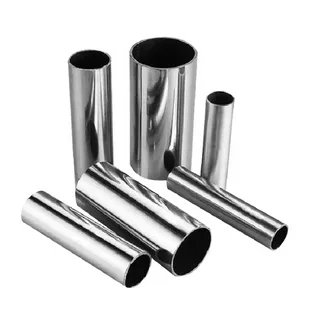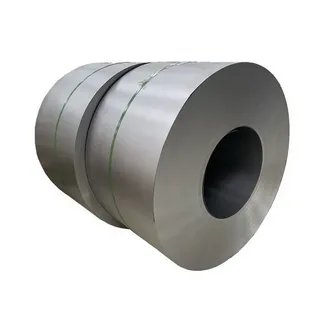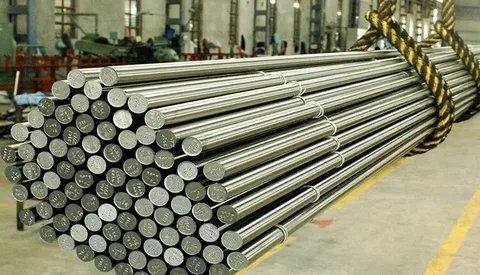
When it comes to industrial applications, construction, plumbing, and fabrication work, the terms **pipe** and **tube** are often used interchangeably. Yet, the **difference between stainless pipe and tube** is significant—affecting design choices, material performance, and standards compliance. Whether you’re an engineer, fabricator, or DIY enthusiast, understanding **pipe and tube difference** is key to success in any project requiring precision, safety, and durability.
In this blog, we’ll explore **what is the difference between pipe and tube**, dive deep into **tube and pipe difference** in terms of manufacturing, measurement, performance, and application, and clarify why choosing the right one matters in real-world scenarios.
—
## 🔍 Understanding the Basics: Pipe vs Tube
### 📌 What Is the Difference Between Pipe and Tube?
At the most fundamental level, the **difference between pipe and tube** lies in **measurement standards**, **applications**, and **specifications**.
* **Pipe** is defined by its **internal diameter (ID)** and is designed to carry fluids or gases.
* **Tube** is defined by its **outside diameter (OD)** and wall thickness, and is typically used in mechanical or structural applications.
In simple terms, the **pipe vs tube** distinction is about purpose: pipes transport contents through a system, while tubes serve structural and precision roles in engineering and manufacturing.
Let’s break this down further.
—
## 🏭 Manufacturing Differences: Pipe and Tube
### 🔧 Pipe Manufacturing
**Stainless steel pipes** are typically manufactured through **seamless or welded processes**, using raw stainless billets or coils. During production:
* Material is heated and shaped through extrusion or rolling.
* Welded pipes are formed by bending steel sheets and fusing them longitudinally.
* Seamless pipes are drilled from solid billets, with no welded seam.
These methods ensure **consistent internal diameter**—crucial for fluid flow and pressure handling.
> Because pipes are measured by ID, they follow standard sizes defined by **nominal pipe size (NPS)** and schedule (wall thickness).
### 🔩 Tube Manufacturing
Manufacturing of **tubes** emphasizes precision and structural integrity:
* Produced via **cold drawing**, **rolling**, or **extrusion** to exact OD and wall thickness.
* Tight tolerances allow tubes to be used where exact dimensions are critical.
Common tube production techniques include:
* **Cold Drawn Tube:** Improves surface finish and dimensional accuracy.
* **Hot Finished Tube:** Suitable for less precise applications, but with broader environmental resistance.
Because tubes are measured by OD, manufacturers can produce sizes that do not correlate with typical pipe IDs, making them more versatile for structural and mechanical components.
—
## 📏 Pipe vs Tube: Measurement and Sizing Standards
Understanding **pipe and tube difference** in measurements is crucial for proper selection and design.
### 🧮 Pipe Sizing
In pipes:
* Sizes refer to **nominal dimensions**, not actual measurements.
* A nominal pipe size (e.g., 2”, 4”) loosely relates to the ID.
* Wall thickness is specified by “schedule” (e.g., SCH 40, SCH 80).
* Actual OD is often larger than stated nominal size.
For example, a nominal 2” pipe may have an actual OD of 2.375”, with varying internal diameters depending on wall thickness.
### 📐 Tube Sizing
For tubes:
* Sizes are specified by **exact OD and wall thickness**.
* Manufacturers guarantee tolerance ranges, enabling precise fitting and fabrication.
This precision makes tubes ideal for structural components, medical devices, and high-performance engineering where dimensional accuracy counts.
—
## 📊 Standards and Specifications: Stainless Steel Pipes and Tubes
When comparing **stainless steel pipes and tubes**, industry standards determine quality, safety, and uniformity—especially in regulated sectors like oil and gas, chemical processing, and construction.
### 🏷 Stainless Steel Pipe Standards
Common pipe standards include:
* **ASTM A312 / A358** – for seamless and welded stainless pipes
* **ASME B36.19** – standard for stainless steel pipe dimensions
These standards ensure pipes can withstand required internal pressures, thermal conditions, and corrosion environments.
### 📏 Tube Standards
Tube standards focus on dimension control and performance:
* **ASTM A269** – covers stainless steel tube for general service
* **ASTM A213 / A269** – high-temperature applications
* **ISO 1127 / DIN 2391** – manufacturing tolerances and dimensions
Since tubes are used in both structural and mechanical applications, their standards often govern strength, fit, and dimensional precision.
—
## 🔍 Pipe and Tube Difference in Strength and Performance
Another key aspect of **pipe vs tube difference** lies in how each performs under pressure and load conditions.
### 🛠 Pipe Performance
Pipes are engineered to transport fluids efficiently:
* Designed for **pressure containment** and continuous flow.
* Internal diameters are consistent to reduce turbulence or flow restrictions.
* Capable of handling high pressure and temperature when manufactured to correct standards.
However, due to broader tolerances in OD and wall thickness, pipes are generally less suited to high-precision mechanical applications.
### 🧱 Tube Performance
Tubes are structurally stronger due to tighter dimensional control:
* Predictable OD and wall thickness lead to consistent strength characteristics.
* Better suited for structural support, fabrication, and mechanical roles like automotive frames or scaffolding.
* Available in square, rectangular, and round shapes, enhancing versatility.
In many structural applications, tubes outperform pipes due to their precise fit and uniform strength.
—
## 🧪 Corrosion Resistance: Stainless Steel Pipes and Tubes
Both stainless steel pipes and tubes share excellent corrosion resistance—one of the major reasons they are widely used in demanding environments.
### 🧪 Why Stainless Steel?
Stainless steel alloys gain corrosion resistance from chromium content, forming a passive layer that protects against oxidation, rust, and corrosive substances.
* Common grades: **304, 316, 310**
* 316 offers better resistance to chlorides and harsh chemical exposure.
* For high-temperature or highly corrosive environments (e.g., chemical plants), specialized grades may be selected.
Because corrosion resistance is tied to the alloy—not whether it’s a pipe or tube—**stainless steel pipes and tubes** both benefit from durability and long service life.
—
## 🧰 Applications: Pipe vs Tube
Understanding **what is the difference between pipe and tube** also means recognizing where each is best applied.
### 🚰 Typical Applications of Stainless Steel Pipes
Stainless steel pipes are predominantly used where **fluids or gases need to be conveyed safely**:
* Water supply and wastewater processing
* Oil and gas pipelines
* Chemical process plants
* HVAC and refrigeration systems
* Fire suppression and sprinkler systems
Because pipes are defined by ID and standardized for flow, they ensure predictable performance in fluid systems.
### 🏗 Tube Applications
Stainless steel tubes excel where precision, strength, and versatility are essential:
* Structural supports in buildings and infrastructure
* Automotive and aerospace components
* Instrumentation and hydraulic controls
* Medical equipment
* Heat exchangers and boilers
Tubes are also selected for aesthetic purposes—architectural railings, frames, and decorative structures—due to their smooth finish and uniform dimensions.
—
## 🛠 Pipe and Tube Difference in Fabrication
The **pipe vs tube** difference extends into fabrication techniques.
### 🔩 Welding and Joining
* **Pipes** are generally joined by welding, threading, or flanging.
* **Tubes**, especially precision-grade ones, may require special fittings or high-accuracy welding to preserve alignment.
### 🧰 Cutting and Bending
* Tube fabrication can involve tighter bending tolerances due to consistent outdoor diameters.
* Pipe cutting is generally simpler, focusing on maintaining flow integrity rather than structural conformity.
Fabricators who understand these differences can avoid costly mistakes, poor fitment, and wasted material.
—
## 📦 Cost Considerations: Pipe vs Tube
Cost implications often influence project decisions. Here’s how the **pipe and tube difference** impacts pricing:
### 💵 Pipe Costs
* Often lower cost for basic fluid transport systems
* Standardized sizes help reduce material procurement costs
* May vary based on wall thickness and grade
### 💰 Tube Costs
* Typically higher due to tighter tolerances and precision manufacturing
* Specialized shapes (square, rectangular) may be more expensive
* Chosen when performance and structural integrity outweigh cost concerns
When designing a project, it’s important to balance budget with performance needs—a task made easier by understanding the **difference between stainless pipe and tube**.
—
## 🧠 Choosing the Right Option
To select correctly between pipe and tube, ask:
1. **Is fluid transport the primary requirement?**
* If yes → choose a pipe measured by ID.
2. **Is the application structural or precision-oriented?**
* If yes → choose a tube measured by OD.
3. **Are tight tolerances required?**
* Tube is favored for precision and fitment reliability.
4. **Are standardized fittings and flow rates needed?**
* Pipe offers compatibility with industry standards.
—
## 🧾 Quick Summary: Pipe vs Tube
| Feature | **Pipe** | **Tube** |
| ——————– | ———————- | ——————————– |
| Measurement | By **ID** | By **OD** |
| Standard Sizes | Nominal (e.g., NPS) | Exact OD & wall |
| Purpose | Fluid & gas transport | Structural & precise engineering |
| Tolerance | Broader | Tight & precise |
| Cost | Generally lower | Higher, due to precision |
| Common Standards | ASTM A312, ASME B36.19 | ASTM A269, ISO 1127 |
| Shapes | Mostly round | Round, square, rectangular |
| Application Examples | Plumbing, pipelines | Frameworks, instrumentation |
This table highlights the practical **pipe and tube difference**, helping you determine when to use each.
—
Final Thoughts
Understanding the **difference between stainless pipe and tube** is essential for engineers, builders, and fabricators. While both stainless steel pipes and tubes provide corrosion resistance and strength, they serve distinct purposes in the industrial and manufacturing world.
From measurement and standards to applications and cost, knowing **what is the difference between pipe and tube** can improve design decisions, maximize performance, and reduce costly mistakes.
Whether you’re planning a fluid transport system or designing a precision structure, choosing wisely between a pipe vs tube can be the defining factor in the success of your project.
1. What is the difference between stainless pipe and tube?
The difference between stainless pipe and tube lies mainly in how they are measured, manufactured, and used. Stainless steel pipes are measured by their internal diameter (ID) and are designed primarily for transporting fluids and gases. Tubes, on the other hand, are measured by their outside diameter (OD) and wall thickness, making them suitable for structural, mechanical, and precision applications. This fundamental pipe and tube difference impacts performance, cost, and industry standards.
2. What is the difference between pipe and tube in terms of measurement?
When comparing pipe vs tube, measurement is one of the most critical distinctions. Pipes use nominal pipe size (NPS), which does not reflect the exact outer diameter, while tubes use exact OD and wall thickness. This explains why the tube and pipe difference is so important in fabrication, where precise dimensions are often required.
3. Why are stainless steel pipes measured by internal diameter?
Stainless steel pipes are measured by internal diameter because their primary function is fluid or gas transportation. The internal diameter directly affects flow rate, pressure, and system efficiency. This functional focus is a key reason behind the difference between stainless pipe and tube, especially in industries like oil & gas, plumbing, and chemical processing.
4. Why are stainless steel tubes measured by outside diameter?
Stainless steel tubes are measured by outside diameter because they are often used in structural or mechanical applications where fit, strength, and dimensional accuracy matter. In these cases, the external size determines load-bearing capacity and compatibility with other components, highlighting the practical pipe and tube difference.
5. Are stainless steel pipes and tubes interchangeable?
Although they may look similar, stainless steel pipes and tubes are not always interchangeable. Pipes are optimized for flow and pressure handling, while tubes are optimized for precision and structural strength. Using the wrong product can lead to performance issues, safety risks, or non-compliance with standards, reinforcing why understanding what is the difference between pipe and tube is essential.
6. What standards apply to stainless steel pipes and tubes?
Stainless steel pipes typically follow standards such as ASTM A312, ASTM A358, and ASME B36.19, which focus on pressure and flow requirements. Tubes follow standards like ASTM A269, ASTM A213, and ISO 1127, emphasizing dimensional accuracy and mechanical performance. These differing standards further define the tube and pipe difference.
7. Which is stronger: stainless steel pipe or tube?
Strength depends on application, but in structural terms, tubes are generally stronger due to tighter tolerances and consistent wall thickness. Pipes are strong in pressure-handling scenarios but may not offer the same structural reliability. This performance distinction is a critical aspect of the pipe vs tube comparison.
8. What are the common applications of stainless steel pipes?
Stainless steel pipes are widely used in applications involving fluid or gas transfer, such as water pipelines, oil and gas systems, chemical plants, food processing, and HVAC systems. Their design and standards align perfectly with flow-based requirements, showcasing a clear pipe and tube difference in usage.
9. What are the common applications of stainless steel tubes?
Stainless steel tubes are commonly used in structural frameworks, automotive components, aerospace engineering, medical equipment, heat exchangers, and architectural designs. Their precise dimensions and superior strength make them ideal for these applications, clearly illustrating the difference between stainless pipe and tube.
10. How do I choose between pipe vs tube for my project?
To choose between pipe vs tube, consider your project requirements. If fluid or gas transport is the main goal, a pipe is the correct choice. If structural support, precision, or mechanical strength is required, a tube is more suitable. Understanding what is the difference between pipe and tube ensures better performance, safety, and long-term reliability.