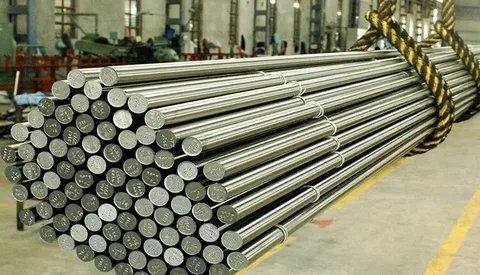
Pipelines don’t fail at straight sections. They fail at stress points — at direction changes, pressure shifts, and thermal expansion zones. That’s exactly where Stainless Steel Pipe Bends prove their engineering value.
Whether you’re designing a refinery system, a pharmaceutical processing line, or a high-pressure steam network, pipe bends are not just fittings — they are structural decisions. The right bend improves flow efficiency, reduces turbulence, minimizes pressure drop, and enhances system longevity. The wrong one? It increases wear, vibration, and maintenance costs.
In this complete guide, we will break down:
- Types of Stainless Steel Pipe Bends
- Uses of Stainless Steel Pipe Bends
- Benefits of Stainless Steel Pipe Bends
- The difference between bends and Stainless Steel Elbow Pipe Fittings
- Major Industrial Stainless Steel Pipe Bends applications
Let’s dive deep.
What Are Stainless Steel Pipe Bends?
Stainless Steel Pipe Bends are pipe fittings used to change the direction of flow in a piping system. Unlike sharp elbows, pipe bends typically have a larger radius, which allows smoother flow transition and reduced pressure loss.
They are manufactured using hot or cold bending processes and are available in various radii and angles to suit different industrial requirements.
But here’s the real question:
Do you want your pipeline to simply change direction — or do you want it to perform efficiently while doing so?
That’s where the choice of bend matters.
Types of Stainless Steel Pipe Bends
Understanding the Types of Stainless Steel Pipe Bends is critical for system design, performance optimization, and compliance with industrial standards.
1. Long Radius Stainless Steel Pipe Bends
Long radius bends typically have a radius of 1.5 times the pipe diameter (1.5D) or more.
Why choose them?
- Reduced friction loss
- Lower turbulence
- Improved flow efficiency
- Ideal for high-pressure and high-flow systems
They are widely used in Industrial Stainless Steel Pipe Bends applications such as oil & gas pipelines and chemical processing plants.
2. Short Radius Stainless Steel Pipe Bends
Short radius bends usually have a radius equal to the pipe diameter (1D).
They are ideal where space constraints exist.
However:
- Higher pressure drop
- Increased turbulence
- More stress concentration
They are often used in compact installations and mechanical rooms.
3. U-Bends
U-bends create a 180-degree change in direction.
They are commonly used in:
- Heat exchangers
- Boiler systems
- Process equipment
These Stainless Steel Pipe Bend Applications are common in industries where thermal cycling and expansion must be accommodated.
4. Induction Bends
Induction bending uses localized heating and controlled force to create large-radius bends without compromising wall thickness.
Key advantages:
- Maintains structural integrity
- Suitable for heavy-duty pipelines
- Excellent for large-diameter pipes
These are often specified in Industrial Stainless Steel Pipe Bends projects in petrochemical and offshore installations.
5. Customized Pipe Bend
Modern engineering rarely fits into standard dimensions. Customized bends are manufactured according to project specifications — angle, radius, thickness, and grade.
This flexibility makes Stainless Steel Pipe Bends indispensable in complex infrastructure systems.
Stainless Steel Elbow Pipe Fittings vs Stainless Steel Pipe Bends
A common question engineers ask:
Are elbows and bends the same?
No — and the difference matters.
Stainless Steel Elbow Pipe Fittings
Stainless Steel Elbow Pipe Fittings are typically prefabricated fittings with standard angles (45°, 90°, 180°). They usually have shorter radii and are mass-produced.
They are:
- Economical
- Easy to install
- Suitable for moderate-pressure systems
Stainless Steel Pipe Bends
In contrast, Stainless Steel Pipe Bends are usually fabricated from pipes and offer:
- Larger radii
- Smoother flow
- Reduced stress
- Lower pressure drop
When performance and longevity are priorities, bends outperform elbows in demanding Stainless Steel Pipe Bend Applications.
Think of elbows as quick solutions — and bends as engineered solutions.
Uses of Stainless Steel Pipe Bends
The Uses of Stainless Steel Pipe Bends span across industries that demand durability, corrosion resistance, and mechanical strength.
1. Oil and Gas Industry
Pipelines transporting crude oil, natural gas, and refined products require high-strength Industrial Stainless Steel Pipe Bends that withstand:
- Extreme pressure
- Temperature fluctuations
- Corrosive media
Long-radius bends are commonly used to reduce erosion and improve flow dynamics.
2. Chemical Processing
Chemical plants handle aggressive substances. Stainless steel grades such as 304, 316, and duplex steels are often used in pipe bends to resist corrosion and chemical reactions.
The right Stainless Steel Pipe Bend Applications ensure:
- Leak prevention
- Safety compliance
- Reduced downtime
3. Power Generation
Steam pipelines in thermal and nuclear power plants rely heavily on precision-engineered Stainless Steel Pipe Bends.
Why?
Because thermal expansion is real — and poorly designed bends fail under cyclic stress.
4. Food and Pharmaceutical Industry
Hygiene is non-negotiable.
Smooth internal surfaces of stainless steel bends prevent contamination, making them ideal for sanitary process piping systems.
5. Water Treatment & Desalination
Corrosion resistance is critical in water treatment facilities. Stainless steel pipe bends ensure long-term reliability even in saline or chemically treated environments.
Stainless Steel Pipe Bend Applications in Modern Infrastructure
Let’s talk about real-world performance.
Modern infrastructure demands:
- Higher efficiency
- Longer lifespan
- Lower maintenance costs
Stainless Steel Pipe Bend Applications in infrastructure include:
- District cooling systems
- Fire protection networks
- HVAC systems
- Marine pipelines
- Offshore platforms
Every time fluid changes direction, stress increases. Properly engineered bends distribute that stress efficiently.
That’s not theory — that’s field experience.
Benefits of Stainless Steel Pipe Bends
Why are industries moving aggressively toward stainless steel solutions?
Because the Benefits of Stainless Steel Pipe Bends are measurable and long-term.
1. Superior Corrosion Resistance
Stainless steel forms a passive oxide layer that protects against rust and corrosion.
This means:
- Longer service life
- Reduced maintenance
- Lower lifecycle cost
2. High Strength-to-Weight Ratio
Despite being strong, stainless steel remains relatively lightweight compared to other alloy systems. This makes installation easier without compromising durability.
3. Reduced Pressure Drop
Long-radius Stainless Steel Pipe Bends improve flow characteristics, reducing energy loss in pumping systems.
Lower turbulence equals:
- Higher efficiency
- Lower operational cost
4. Excellent Thermal Stability
In high-temperature environments, stainless steel maintains structural integrity better than carbon steel.
This makes it ideal for:
- Steam systems
- Heat exchangers
- Boiler lines
5. Sustainability and Recyclability
Stainless steel is 100% recyclable without losing its properties. In today’s environmentally conscious industrial landscape, this is a significant advantage.
Industrial Stainless Steel Pipe Bends: Why Quality Matters
Here’s something many buyers overlook:
Not all Industrial Stainless Steel Pipe Bends are manufactured equally.
Precision bending requires:
- Controlled heating
- Wall thickness monitoring
- Dimensional accuracy
- Surface finish inspection
- Compliance with international standards
Poor bending can lead to:
- Wall thinning
- Micro-cracks
- Structural weakness
And in high-pressure systems, that’s unacceptable.
When selecting a supplier, expertise and manufacturing capability matter as much as the material grade itself.
How to Choose the Right Stainless Steel Pipe Bends
Before specifying a bend, ask yourself:
- What is the operating pressure?
- What temperature will the system reach?
- Is the media corrosive?
- Are space constraints a factor?
- Is long-term maintenance a concern?
Your answers determine:
- Bend radius
- Wall thickness
- Stainless steel grade
- Manufacturing method
The wrong choice increases operational cost. The right one optimizes performance for decades.
Final Thoughts: Engineering Confidence with Stainless Steel Pipe Bends
In pipeline design, every turn tells a story.
A sharp elbow tells a story of compromise.
A properly engineered Stainless Steel Pipe Bends system tells a story of foresight, performance, and reliability.
From oil refineries to pharmaceutical clean rooms, from power plants to marine installations, the demand for high-quality Industrial Stainless Steel Pipe Bends continues to grow — because industries cannot afford inefficiency, corrosion, or failure.
Understanding the Types of Stainless Steel Pipe Bends, their real-world Uses of Stainless Steel Pipe Bends, and the measurable Benefits of Stainless Steel Pipe Bends empowers you to make informed engineering decisions.
And in infrastructure — informed decisions are profitable decisions.
FAQs:
What Are Stainless Steel Pipe Bends?
Stainless Steel Pipe Bends are piping components used to change the direction of fluid flow within a pipeline system. Unlike straight pipes, bends allow systems to navigate around obstacles, fit within compact layouts, and maintain efficient flow dynamics.
They are widely used in oil & gas, construction, power plants, chemical processing, water treatment, and food industries. Due to their corrosion resistance, strength, and durability, stainless steel bends are preferred for high-pressure and high-temperature environments.
In simple terms, if pipelines need to turn without compromising performance, Stainless Steel Pipe Bends are the engineered solution.
What Are the Different Types of Stainless Steel Pipe Bends?
Types of Stainless Steel Pipe Bends
Understanding the Types of Stainless Steel Pipe Bends is crucial for selecting the right component for your piping system.
The most common types include:
- Long Radius (LR) Pipe Bends – Typically 1.5 times the pipe diameter; ideal for smooth flow and minimal pressure drop.
- Short Radius (SR) Pipe Bends – Radius equals the pipe diameter; used where space is limited.
- U-Bends – Create a 180-degree change in direction.
- 3D, 5D, and 10D Bends – Defined by their bending radius relative to pipe diameter.
- Hot Induction Bends – Used for large-diameter and heavy-wall industrial pipelines.
Each type serves specific Stainless Steel Pipe Bend Applications, depending on system pressure, space constraints, and flow requirements.
How Are Stainless Steel Elbow Pipe Fittings Different from Pipe Bends?
Stainless Steel Elbow Pipe Fittings vs. Pipe Bends
Many professionals use these terms interchangeably, but there is a technical difference.
Stainless Steel Elbow Pipe Fittings are prefabricated fittings (commonly 45° or 90°) used to change flow direction sharply. They are standardized components and are typically butt-welded or socket-welded.
On the other hand, Stainless Steel Pipe Bends are usually custom-fabricated with a smoother curvature and larger radius. They reduce turbulence and pressure drop compared to elbows.
In high-performance Industrial Stainless Steel Pipe Bends systems, engineers often prefer bends over elbows to improve flow efficiency and reduce erosion.
What Are the Major Uses of Stainless Steel Pipe Bends?
Uses of Stainless Steel Pipe Bends Across Industries
The Uses of Stainless Steel Pipe Bends extend across multiple industries due to their adaptability and performance.
Common applications include:
- Oil and gas transmission pipelines
- Chemical processing plants
- Power generation facilities
- Water supply and wastewater systems
- Food and beverage processing units
- Marine and offshore installations
These industries rely on stainless steel because it resists corrosion, withstands high pressure, and maintains structural integrity under extreme conditions.
The diversity of Stainless Steel Pipe Bend Applications makes them indispensable in modern infrastructure.
What Are the Benefits of Stainless Steel Pipe Bends?
Key Benefits of Stainless Steel Pipe Bends
The Benefits of Stainless Steel Pipe Bends go beyond simply changing pipeline direction.
Key advantages include:
- Corrosion Resistance: Ideal for harsh chemical and marine environments.
- High Strength: Suitable for high-pressure systems.
- Improved Flow Efficiency: Smooth curvature reduces turbulence and pressure loss.
- Durability: Long service life with minimal maintenance.
- Temperature Resistance: Performs well in both high-heat and cryogenic applications.
- Hygienic Properties: Essential for food and pharmaceutical industries.
For industries focused on long-term operational efficiency, these benefits translate into lower maintenance costs and improved safety.
Where Are Industrial Stainless Steel Pipe Bends Most Commonly Used?
Industrial Stainless Steel Pipe Bends in Heavy-Duty Applications
Industrial Stainless Steel Pipe Bends are essential in sectors where operational reliability is non-negotiable.
They are widely used in:
- Refinery process lines
- Boiler systems
- Petrochemical pipelines
- Offshore drilling platforms
- Structural piping in large facilities
In these environments, material quality directly impacts safety and system longevity. Precision manufacturing ensures that the bends maintain wall thickness and structural integrity during operation.
What Factors Should Be Considered When Selecting Stainless Steel Pipe Bends?
Choosing the correct Stainless Steel Pipe Bends requires evaluating several technical parameters:
- Pipe diameter and wall thickness
- Required bending radius
- Operating pressure and temperature
- Corrosive environment exposure
- Welding compatibility
- Compliance with international standards
Selecting the wrong type can lead to pressure loss, stress concentration, or premature failure. That is why understanding the Types of Stainless Steel Pipe Bends and their engineering specifications is essential.
How Do Stainless Steel Pipe Bend Applications Improve Flow Efficiency?
Stainless Steel Pipe Bend Applications and System Performance
One of the most overlooked aspects of Stainless Steel Pipe Bend Applications is their role in fluid dynamics.
Long-radius bends allow smoother directional changes compared to sharp elbows. This results in:
- Reduced turbulence
- Lower pressure drop
- Minimized erosion
- Improved energy efficiency
In large-scale industrial operations, even small improvements in flow efficiency can lead to significant cost savings over time.
Why Is Quality Manufacturing Important for Stainless Steel Pipe Bends?
The performance of Stainless Steel Pipe Bends depends heavily on manufacturing precision.
High-quality production begins with carefully selected raw materials that meet international composition standards. Advanced forming and bending processes ensure dimensional accuracy and consistent mechanical properties.
Stringent quality assurance protocols are critical in ensuring that:
- Wall thickness remains uniform
- Surface finish meets industry standards
- Structural strength is maintained
- Weld integrity is uncompromised
Manufacturers such as Arham Alloys emphasize precision engineering and strict quality control to deliver reliable stainless steel solutions for modern industries.
Are Stainless Steel Pipe Bends Suitable for High-Temperature and Corrosive Environments?
Yes. One of the primary Benefits of Stainless Steel Pipe Bends is their exceptional performance in challenging environments.
Stainless steel offers:
- Oxidation resistance at high temperatures
- Resistance to acids, alkalis, and salts
- Structural stability under thermal expansion
This makes them ideal for chemical processing, marine applications, and power generation plants.
Can Stainless Steel Pipe Bends Be Customized?
Absolutely. Many Industrial Stainless Steel Pipe Bends are custom-fabricated to meet project-specific requirements.
Customization may include:
- Non-standard bend radii
- Special wall thicknesses
- Large-diameter induction bends
- Project-specific grade selection
Custom fabrication ensures compatibility with complex pipeline layouts and demanding operational conditions.
How Do Stainless Steel Elbow Pipe Fittings Compare in Cost and Performance?
While Stainless Steel Elbow Pipe Fittings may be more economical for smaller or less demanding systems, pipe bends often deliver superior long-term performance.
Elbows are suitable for compact installations, whereas pipe bends are preferred when:
- Flow efficiency is critical
- Pressure drop must be minimized
- Erosion risks are high
The decision ultimately depends on the specific Uses of Stainless Steel Pipe Bends within the system.++++