Stainless steel pipes and tubes are among the most specified materials in modern industrial fabrication, and for good reason. They offer a rare combination of mechanical strength, corrosion resistance, hygienic surface quality, and long service life that few alternative materials can replicate. But here’s where most buyers go wrong: they treat all stainless steel pipes and tubes as interchangeable. They aren’t. Grade selection, dimensional specifications, manufacturing method, and surface finish all play decisive roles in whether a piping system thrives or fails under real operating conditions.
This guide is built on experience — not theory. Whether you’re specifying piping for a chemical processing plant, a pharmaceutical clean room, a marine installation, or a high-pressure hydraulic system, what follows will give you the clarity to make informed, confident material decisions.
Understanding Stainless Steel Pipes and Tubes — What’s the Difference?
Before diving into grades and applications, let’s settle a distinction that causes more confusion than it should.
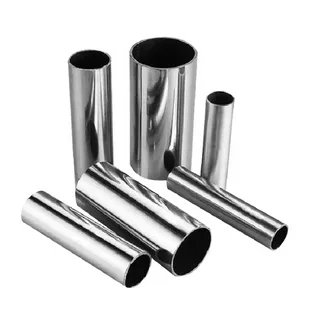
Stainless steel pipes are defined by their internal diameter (ID) and are primarily used to transport fluids and gases. Their sizing follows nominal pipe size (NPS) or DN (Diamètre Nominal) standards. Tubes, on the other hand, are defined by their outside diameter (OD) and wall thickness, and are specified for structural, mechanical, or precision fluid-carrying applications. The distinction matters enormously when you’re working to tight engineering tolerances or ordering to ASTM standards.
Both pipes and tubes are produced in a range of stainless steel grades, and both are available as seamless or welded products — a choice that carries significant implications for performance, which we’ll cover in detail shortly.
Stainless Steel Pipe Grades — Choosing the Right Alloy for the Job
Why Grade Selection Is Non-Negotiable
Ask any seasoned fabrication engineer what the most common and costly mistake in piping specification is, and they’ll tell you the same thing: wrong grade selection. The operating environment dictates the alloy. There is no universal stainless steel pipe grade, and substituting one for another without understanding the metallurgical implications is a risk no serious operation can afford.
Grade 304 Stainless Steel Pipes and Tubes
Grade 304 is the workhorse of the stainless steel world. With a composition of 18% chromium and 8% nickel, it delivers solid corrosion resistance in a wide range of environments, excellent formability, and reliable weldability. It is the go-to grade for food processing lines, dairy equipment, architectural pipework, water distribution systems, and general-purpose industrial piping where the operating environment is not aggressively corrosive.
Cost-effective and widely available, 304 stainless steel pipes and tubes dominate applications where the exposure to chlorides, acids, or marine conditions is limited. If your system doesn’t operate in a hostile chemical environment, 304 will likely serve you well — and it will do so at a price point that keeps your project budget intact.
Grade 316 Stainless Steel Pipes and Tubes
When the environment turns hostile, Grade 316 steps in. The addition of 2–3% molybdenum to the standard 18/8 chromium-nickel composition fundamentally transforms the alloy’s resistance to chloride-induced pitting and crevice corrosion — the type of corrosion that silently destroys piping systems in marine, offshore, pharmaceutical, and chemical processing environments.
If your pipework carries chlorinated water, brine, seawater, or aggressive acid solutions — or if it’s installed near a coastline — 316 is not an upgrade, it’s a requirement. The premium over 304 is real, but so is the cost of replacing a corroded pipeline ahead of schedule.
304 vs 316 Stainless Steel Pipes — Making the Call
The 304 vs 316 stainless steel pipes debate comes down to three factors: environment, budget, and design life expectancy.
In a dry indoor environment with no chemical exposure? 304 wins on economy. In a coastal pharmaceutical plant processing saline solutions? 316 is the only defensible choice. In applications where the operating conditions sit somewhere in between, a life-cycle cost analysis almost always favors the upfront investment in 316. A pipeline that lasts 25 years costs less than one that needs replacing in 12.
Other Notable Stainless Steel Pipe Grades
Beyond 304 and 316, the stainless steel pipe grades landscape includes several alloys worth knowing:
Grade 321 incorporates titanium stabilization to prevent sensitization during welding, making it essential in high-temperature exhaust systems and heat exchangers. Grade 347 offers similar stabilization using niobium and is specified in petrochemical and power generation applications. Duplex grades such as 2205 deliver yield strength nearly double that of standard austenitic grades while maintaining excellent resistance to stress corrosion cracking — making them increasingly specified in oil and gas piping systems. Super duplex grade 2507 takes corrosion resistance even further for the most aggressive offshore and chemical environments.
Seamless vs Welded Stainless Steel Tubes — A Decision That Defines Performance
The Case for Seamless Stainless Steel Tubes
Seamless stainless steel tubes are produced by piercing a solid billet and extruding or drawing it to the required dimensions — a process that results in a tube with no longitudinal weld seam. This matters. In high-pressure applications, in systems subject to cyclic fatigue loading, or wherever the integrity of the tube wall must be absolute, seamless is the specification that engineers reach for first.
Seamless tubes are standard in hydraulic systems, instrumentation lines, boiler tubing, and critical heat exchanger applications. They meet tighter dimensional tolerances, carry higher pressure ratings, and eliminate the risk of weld seam failure. Yes, they cost more than welded alternatives. But in a high-consequence application, that cost premium is one of the most sensible investments on your bill of materials.
The Case for Welded Stainless Steel Tubes
Welded stainless steel tubes are formed by rolling flat strip into a tubular shape and fusing the seam using TIG or laser welding processes. Modern welding technology has made today’s welded tubes exceptionally reliable, and for many applications — structural frameworks, general fluid conveyance, food and beverage lines, and architectural installations — they are entirely appropriate and considerably more economical than seamless alternatives.
Where wall thickness consistency, surface finish, and dimensional precision are paramount but operating pressures are moderate, welded tubes deliver excellent value. They are also available in a wider range of sizes and grades, which can simplify procurement for large or varied projects.
So Which Do You Specify?
If the system is high-pressure, high-temperature, or subject to rigorous non-destructive testing requirements, specify seamless. If the application is structural, aesthetic, or involves moderate-pressure fluid transfer, welded stainless steel tubes deliver the performance you need at a fraction of the cost. And if you’re uncertain — ask your material supplier to walk you through the applicable ASTM or EN standard for your service conditions. That conversation can save you from an expensive specification error.
Stainless Steel Tube Applications — Where These Materials Truly Shine
Industrial Stainless Steel Pipes in Chemical and Petrochemical Processing
Industrial stainless steel pipes form the circulatory system of chemical plants, refineries, and processing facilities worldwide. They carry corrosive acids, solvents, high-temperature process streams, and pressurized gases through environments that would destroy carbon steel in months. The correct grade selection, combined with properly specified wall thickness and end connections, gives these systems the durability to operate for decades with minimal intervention.
Food, Beverage, and Pharmaceutical Applications
Sanitary stainless steel tube applications are among the most demanding — not because of pressure or temperature, but because of hygiene. In food processing, dairy production, brewing, and pharmaceutical manufacturing, the tube’s internal surface must be smooth enough to prevent bacterial adhesion, compatible with aggressive CIP (clean-in-place) and SIP (sterilize-in-place) protocols, and free from crevices where contamination can accumulate. Electropolished 316L tubes, produced to standards such as ASTM A270, are the benchmark specification in these industries.
Structural and Architectural Applications
Not every stainless steel tube application involves fluid transfer. Structural designers and architects specify stainless steel tubes extensively for handrails, balustrades, curtain wall supports, canopies, and furniture frameworks. Here, the priorities shift from corrosion resistance to aesthetics, formability, and weldability — requirements that 304 grade welded tubes handle with distinction.
Heat Exchangers and Boiler Tubing
Heat exchangers demand tubing that can withstand thermal cycling, differential pressure, and corrosive process media simultaneously. Stainless steel tube applications in this sector typically call for seamless tubes to ASTM A213, produced in grades 304, 316, or 321 depending on the operating temperature and the chemical nature of the process fluid.
Stainless Steel Pipe Selection Guide — A Practical Framework
Step 1 — Define the Operating Environment
Temperature, pressure, media chemistry, and exposure conditions are the non-negotiable inputs. A pipe that performs perfectly in a potable water system may fail rapidly in a chlorinated effluent line. Know your environment before you know your grade.
Step 2 — Determine the Required Standard
ASTM standards govern the chemical composition, mechanical properties, and dimensional tolerances of stainless steel pipes and tubes sold into most global markets. Key references include ASTM A312 for seamless and welded austenitic stainless steel pipes, ASTM A213 for seamless ferritic and austenitic alloy-steel boiler tubes, and ASTM A269 for seamless and welded austenitic stainless steel tubing for general service. Specifying the correct standard protects you legally, operationally, and financially.
Step 3 — Choose Between Seamless and Welded
Apply the logic outlined earlier in this guide. High pressure and critical service? Seamless. Moderate service conditions with cost sensitivity? Welded. When in doubt, over-specify — the cost of a pipeline failure far exceeds the cost of a better tube.
Step 4 — Verify Surface Finish and End Condition Requirements
For sanitary applications, specify the internal surface roughness (Ra value) explicitly. For structural applications, determine whether a mill finish, polished finish, or bright annealed finish is required. For mechanical tubing, confirm whether the ends need to be plain, beveled, or threaded. These details matter at installation, and resolving them at the procurement stage saves time and money downstream.
Step 5 — Partner With a Supplier Who Understands What You’re Building
Material certifications, traceability, consistent quality, and technical support are not optional extras — they are baseline expectations. A supplier who can provide mill test reports, confirm compliance with the specified ASTM standard, and advise on grade selection based on your service conditions is worth more than a competitive price on a single order.
Conclusion: The Right Stainless Steel Pipe Is the One That Performs When It Matters
Stainless steel pipes and tubes are not commodities. They are engineered materials, and the decisions made at the specification stage — grade, manufacturing method, surface finish, applicable standard — determine how reliably a system performs across its entire service life.
The guidance in this stainless steel pipe selection guide is drawn from real-world fabrication experience. Grade 304 and 316 serve the majority of applications, but knowing when to step up to duplex, super duplex, or stabilized grades is what separates competent specification from expert specification. Seamless vs welded stainless steel tubes is not a matter of preference — it’s a function of operating conditions and consequence of failure.
Choose with precision. Specify with confidence. And always source from a supplier whose quality standards are as high as yours.
Frequently Asked Questions:
What Are Stainless Steel Pipes and Tubes, and How Are They Different?
Stainless steel pipes and tubes are hollow cylindrical products manufactured from various grades of stainless steel alloy, designed to convey fluids, gases, or structural loads across a wide range of industrial and commercial applications. While they are often referenced interchangeably, they are technically distinct products with different dimensional conventions and end-use purposes.
Stainless steel pipes are sized by their nominal bore (internal diameter) and are primarily intended for fluid and gas transport. Stainless steel tubes, by contrast, are defined by their outside diameter and wall thickness, and are used in structural, mechanical, and precision instrumentation applications. Understanding this distinction is essential before entering any procurement or specification process, as ordering the wrong product type can result in costly dimensional mismatches at the installation stage.
What Are the Main Stainless Steel Pipe Grades and What Do They Mean?
How Are Stainless Steel Pipe Grades Classified?
Stainless steel pipe grades are classified primarily by their chemical composition and microstructural family. The most common families used in piping applications are austenitic, ferritic, martensitic, and duplex. Among these, austenitic grades — particularly 304 and 316 — account for the vast majority of stainless steel pipes and tubes specified globally, owing to their superior corrosion resistance, excellent weldability, and broad temperature range performance.
What Is Grade 304 Stainless Steel, and When Should It Be Used?
Grade 304 is the most widely used of all stainless steel pipe grades. Its composition — 18% chromium and 8% nickel — delivers reliable corrosion resistance across a broad range of environments, along with good formability and weldability. It is the standard specification for water distribution systems, food processing lines, dairy equipment, architectural pipework, and general-purpose industrial piping where aggressive chemical exposure is not a primary concern.
For fabricators and procurement teams working within cost-sensitive budgets, 304 stainless steel pipes and tubes offer the best balance of performance and price in non-aggressive service conditions.
What Is Grade 316 Stainless Steel, and When Is It Necessary?
Grade 316 stainless steel pipes and tubes incorporate 2–3% molybdenum in addition to the standard chromium-nickel base, which substantially improves resistance to chloride-induced pitting and crevice corrosion. This makes 316 the appropriate grade for marine and offshore installations, pharmaceutical manufacturing, chemical processing, and coastal infrastructure where exposure to chlorides, saline solutions, or aggressive acids is routine.
If a 304 pipe is installed in a 316-grade environment, premature corrosion is not a question of if — it’s a question of when. Specifying the correct grade from the outset is always more economical than managing early material failure.
What Other Stainless Steel Pipe Grades Are Commonly Used in Industry?
Beyond 304 and 316, several other stainless steel pipe grades are regularly specified depending on service conditions. Grade 321 incorporates titanium stabilization to prevent carbide precipitation during welding and high-temperature exposure, making it essential in exhaust systems and heat exchangers. Grade 347 uses niobium for similar stabilization and is common in petrochemical and power generation piping. Duplex grade 2205 offers nearly double the yield strength of standard austenitic grades while providing excellent resistance to stress corrosion cracking, making it increasingly prevalent in oil and gas systems. For the most extreme chemical and offshore environments, super duplex grade 2507 provides the highest tier of corrosion protection available in commercial piping.
What Are the Key Stainless Steel Tube Applications Across Industries?
How Are Industrial Stainless Steel Pipes Used in Chemical and Petrochemical Processing?
Industrial stainless steel pipes form the primary conveyance network in chemical plants, refineries, and processing facilities. These systems carry corrosive acids, solvents, pressurized gases, and high-temperature process streams through environments that would cause carbon steel to deteriorate within months. The correct grade of stainless steel pipe, combined with appropriate wall thickness and connection specifications, enables these systems to operate reliably for decades.
In this sector, industrial stainless steel pipes are typically specified to ASTM A312, covering seamless and welded austenitic grades, or to ASTM A358 for electric-fusion-welded pipes intended for high-temperature service.
What Are the Stainless Steel Tube Applications in Food, Beverage, and Pharmaceutical Industries?
Sanitary stainless steel tube applications are governed by hygiene requirements that go well beyond standard corrosion resistance. In food processing, dairy production, brewing, and pharmaceutical manufacturing, the internal surface of the tube must be smooth enough to prevent bacterial adhesion and compatible with aggressive clean-in-place (CIP) and sterilize-in-place (SIP) protocols. Electropolished 316L tubes produced to ASTM A270 are the benchmark specification for these industries, offering both the chemical resistance of 316 and the ultra-smooth internal surface finish that sanitary standards demand.
How Are Stainless Steel Tubes Used in Heat Exchangers and Boiler Systems?
Heat exchanger and boiler tubing represents one of the most demanding stainless steel tube applications in engineering. These tubes must withstand simultaneous thermal cycling, differential pressures, and contact with corrosive process media. Seamless tubes produced to ASTM A213 in grades 304, 316, or 321 are the standard specification for these applications. The absence of a weld seam ensures consistent wall integrity under cyclic thermal stress — a condition that can cause weld seam fatigue failure in lower-quality alternatives.
What Role Do Stainless Steel Tubes Play in Structural and Architectural Applications?
Not every stainless steel tube application involves fluid conveyance. Structural engineers and architects specify stainless steel tubes extensively for handrails, balustrades, curtain wall systems, canopy supports, and furniture frameworks. Here, the specification priorities shift toward aesthetic finish, formability, and dimensional consistency. Grade 304 welded tubes with polished or brushed surface finishes are the most commonly specified products for architectural applications, combining visual appeal with long-term surface integrity in both indoor and outdoor environments.
Are Stainless Steel Pipes Used in Oil, Gas, and Energy Applications?
Yes — and extensively so. Industrial stainless steel pipes are critical components in upstream, midstream, and downstream oil and gas infrastructure. Duplex and super duplex grades are increasingly specified for subsea pipelines and process piping in offshore platforms, where resistance to hydrogen sulfide, carbon dioxide, and seawater must be maintained under high pressure at depth. In power generation, stainless steel tubes handle superheated steam and aggressive cooling media in turbine and condenser systems.
What Is the Difference Between Seamless and Welded Stainless Steel Tubes?
How Are Seamless Stainless Steel Tubes Manufactured?
Seamless stainless steel tubes are produced by piercing a solid stainless steel billet and extruding or drawing it to the required outside diameter and wall thickness. Because the process produces a tube with no longitudinal weld seam, seamless tubes offer uniform wall integrity, tighter dimensional tolerances, and superior performance under high-pressure and high-cycle fatigue conditions. They are the standard specification for hydraulic systems, boiler tubing, instrumentation lines, and any application where the consequence of tube failure is severe.
How Are Welded Stainless Steel Tubes Made, and Where Are They Appropriate?
Welded stainless steel tubes are produced by forming flat stainless steel strip into a tubular shape and fusing the longitudinal seam using TIG, plasma, or laser welding processes. Modern welding technology has made welded tubes highly reliable for a wide range of service conditions, and they are considerably more economical than seamless alternatives in equivalent sizes and grades. For structural applications, general fluid conveyance at moderate pressures, food processing lines, and architectural installations, welded stainless steel tubes deliver appropriate performance at a more competitive price point.
When Should You Specify Seamless vs Welded Stainless Steel Tubes?
The seamless vs welded stainless steel tubes decision should be driven by operating pressure, service criticality, and applicable standards — not by cost alone. Seamless tubes are mandatory in high-pressure hydraulic systems, critical process instrumentation, boiler and heat exchanger applications, and wherever non-destructive testing requirements are stringent. Welded tubes are entirely appropriate for moderate-pressure fluid service, structural frameworks, sanitary piping, and architectural installations. When design conditions sit in a grey area, the safer engineering decision is always to specify seamless — the cost of a tube failure in a critical system far exceeds any savings made at the procurement stage.
How Should Stainless Steel Pipes and Tubes Be Selected? A Practical Stainless Steel Pipe Selection Guide
What Is the First Step in the Stainless Steel Pipe Selection Guide?
The first step in any stainless steel pipe selection process is a thorough analysis of the operating environment. Temperature range, operating pressure, the chemical nature of the media being conveyed, and the presence of chlorides or other aggressive species are the primary inputs that drive grade selection. Selecting a grade without this information is specification by assumption — and assumptions in material selection carry real engineering risk.
How Do Applicable Standards Factor Into Pipe and Tube Selection?
International standards define the chemical composition, mechanical properties, dimensional tolerances, and testing requirements that stainless steel pipes and tubes must meet. In most global markets, ASTM standards govern these requirements. ASTM A312 covers seamless and welded austenitic stainless steel pipes for general corrosive and high-temperature service. ASTM A213 applies to seamless ferritic and austenitic alloy-steel boiler, superheater, and heat exchanger tubes. ASTM A269 covers seamless and welded austenitic stainless steel tubing for general service. Specifying the correct standard protects the integrity of the installation and ensures regulatory compliance in industries governed by bodies such as ASME, FDA, or ISO.
How Does Surface Finish Affect the Selection of Stainless Steel Tubes?
Surface finish is a critical selection parameter in sanitary, pharmaceutical, and high-purity stainless steel tube applications. The internal surface roughness, measured in Ra (roughness average) values, determines the tube’s suitability for CIP/SIP cleaning protocols and bacterial contamination prevention. Electropolished surfaces achieve Ra values below 0.5 µm and are mandatory in pharmaceutical and biotechnology piping. For structural and general industrial applications, mill finish, brushed, or bright annealed surfaces are standard options, each carrying different aesthetic and corrosion performance characteristics.
What Should Buyers Look for in a Stainless Steel Pipe and Tube Supplier?
Material traceability, certified mill test reports, dimensional consistency, and technical competence are the baseline expectations from any credible stainless steel pipe and tube supplier. A supplier who can confirm compliance with the specified ASTM or EN standard, advise on grade selection based on service conditions, and offer a comprehensive range of sizes and delivery conditions from a single source is a procurement asset — not just a vendor.
At Arham Alloys, these expectations are met through state-of-the-art production facilities and stringent quality assurance protocols embedded at every stage of manufacturing. The process begins with carefully selected raw materials that meet international composition standards. Through controlled cold-drawing operations, the precise dimensions and mechanical properties demanded by modern industries are consistently achieved. Whether a project demands soft-annealed product for easy forming, light-drawn material for moderate strength applications, or product cold-drawn to specific tensile properties, Arham Alloys delivers the exact specification required. The comprehensive range of diameters and delivery states available enables manufacturers and fabricators to consolidate all their stainless steel pipe and tube requirements with a single, reliable supplier — eliminating the supply chain complexity that comes with managing multiple material sources.
What Are the Most Common Mistakes Made When Specifying Stainless Steel Pipes and Tubes?
Is Substituting 304 for 316 in Aggressive Environments a Risk?
It is one of the most common and costly mistakes in stainless steel pipe specification. The two grades look identical and are dimensionally interchangeable, but their corrosion performance in chloride-rich or chemically aggressive environments is fundamentally different. In a marine, pharmaceutical, or chemical processing installation, substituting 304 for 316 stainless steel pipes and tubes can result in pitting corrosion, stress corrosion cracking, and premature system failure — none of which are covered under standard material warranties when the wrong grade has been specified.
Does Welding Affect the Corrosion Resistance of Stainless Steel Pipes?
Yes. Improper welding of austenitic stainless steel pipes and tubes can cause sensitization — a process in which chromium carbides precipitate at grain boundaries during exposure to heat, depleting the chromium available to form the passive oxide layer. The result is a localized reduction in corrosion resistance known as intergranular corrosion. Specifying stabilized grades such as 321 or 347, or low-carbon grades such as 304L or 316L, in applications involving welding eliminates this risk and preserves the corrosion performance of the finished assembly.
Why Does Contact With Carbon Steel Compromise Stainless Steel Pipe Performance?
Stainless steel pipes and tubes stored or handled in contact with carbon steel are vulnerable to contamination. Iron particles from carbon steel surfaces can embed in or deposit on the stainless steel surface, initiating rust spots and compromising the passive oxide layer that gives stainless steel its corrosion resistance. Proper segregated storage, dedicated handling equipment, and post-fabrication passivation treatments are essential safeguards, particularly in projects where the finished installation must meet strict corrosion resistance or cleanliness standards.
Why Is Arham Alloys a Trusted Source for Stainless Steel Pipes and Tubes?
Arham Alloys brings together advanced manufacturing capability, rigorous quality protocols, and deep technical knowledge to supply stainless steel pipes and tubes that consistently meet the demands of precision industrial fabrication. Every product dispatched is backed by full material traceability, compliance with applicable international standards, and the manufacturing consistency that comes from controlled cold-drawing operations and carefully managed raw material sourcing.
The ability to supply across multiple delivery states — from soft-annealed to specific cold-drawn tensile conditions — and across a comprehensive range of diameters means that fabricators and manufacturers can rely on Arham Alloys as a single-source partner for all their stainless steel pipe and tube requirements. That reliability, built on genuine manufacturing expertise and an uncompromising approach to quality assurance, is what distinguishes a supplier from a true materials partner.