Here is an uncomfortable truth that veteran plant engineers already know: a leaking fitting does not announce itself weeks in advance. It waits — until the most critical production run of the quarter — and then it fails. The root cause, more often than not, is not a manufacturing defect. It is a selection error made at the specification stage.
Choosing stainless steel pipe fittings for industrial use is not a cataloguing exercise. It is an engineering decision that sits at the intersection of material science, fluid dynamics, regulatory compliance, and long-term cost management. Get it right, and your system runs silently for decades. Get it wrong, and you are looking at unplanned shutdowns, costly repairs, and potentially far worse consequences in hazardous service environments.
This guide cuts through the noise. Whether you are specifying fittings for a new greenfield plant, upgrading an aging facility, or simply trying to make a more informed procurement decision, what follows is everything you need — drawn from deep industry experience — to select industrial stainless steel pipe fittings with confidence.
The right fitting is invisible. You never think about it again. The wrong one becomes the most expensive decision on your project.
Why Stainless Steel Pipe Fittings for Industrial Use Outperform the Alternatives
Before diving into selection criteria, it is worth anchoring on why stainless steel is the material of choice in demanding industrial environments — and why simply defaulting to carbon steel or plastic fittings is a false economy in most process applications.
Stainless steel derives its corrosion resistance from a passive chromium oxide film that forms spontaneously on the surface. This film is self-repairing — scratch it, and it regenerates in the presence of oxygen. The result is a material that resists oxidation, pitting, crevice corrosion, and biological fouling across a wide spectrum of service conditions. No coating. No lining. No annual re-treatment.
Compare this to carbon steel fittings, which require protective coatings that degrade over time, particularly in humid or chemically aggressive environments. Plastic fittings, while corrosion-resistant, have hard limits in terms of temperature, pressure, and mechanical impact. Industrial processes frequently test all three of these boundaries simultaneously.
The long-term economics are clear. The upfront premium for corrosion-resistant pipe fittings in stainless steel is consistently recovered through reduced maintenance costs, longer service intervals, and the absence of catastrophic failure events that carry their own enormous price tags.
Know Your Types of Stainless Steel Pipe Fittings
Here is where many procurement decisions go wrong. Engineers specify a grade correctly but select the wrong fitting geometry for the application. The result? Flow restriction, stress concentration, premature failure, or an installation that simply cannot be assembled without significant rework.
Understanding the types of stainless steel pipe fittings available — and what each one is engineered to do — is foundational to a sound selection.
Elbows — Controlling Direction Without Killing Pressure
Elbows redirect flow and come in two main angles: 45-degree and 90-degree. Within the 90-degree category, long-radius (LR) elbows have a centreline radius of 1.5 times the nominal pipe diameter, while short-radius (SR) elbows use a 1.0D radius. Long-radius elbows produce significantly lower pressure drop and are the default choice for most process piping. Short-radius variants are used only where space constraints make them unavoidable — and always with an eye on the increased turbulence and erosion risk they introduce at higher velocities.
Tees — Splitting and Combining Flow
Tees allow a pipeline to branch or merge. Equal tees have the same diameter on all three connections; reducing tees have a smaller branch outlet. Weldolets and threadolets serve a similar purpose for branch connections where a full tee is impractical. When selecting a tee for high-velocity or high-temperature service, always check that the branch reinforcement meets the requirements of the applicable design code — unreinforced branch connections are a common source of fatigue cracking in cyclic service.
Reducers — Managing Velocity and Flow Transitions
Concentric reducers maintain centreline alignment and are used in vertical lines or where alignment is critical. Eccentric reducers maintain a flat bottom or top, making them the standard choice for horizontal lines where drainage or venting of trapped liquid or gas is required. Specifying the wrong reducer type in a pump suction line, for instance, can introduce air entrainment — a textbook cause of pump cavitation.
Couplings, Unions, and Caps
Couplings connect two pipe ends of the same diameter. Unions allow a section of pipe to be disconnected without rotating either pipe — essential in systems that require regular disassembly for maintenance. Caps seal the end of a pipe or fitting. These may seem straightforward, but their pressure and temperature ratings must still be verified against system requirements. A cap rated for 150 psi has no place on a line operating at 600 psi Class conditions.
Flanged Fittings and Nipples
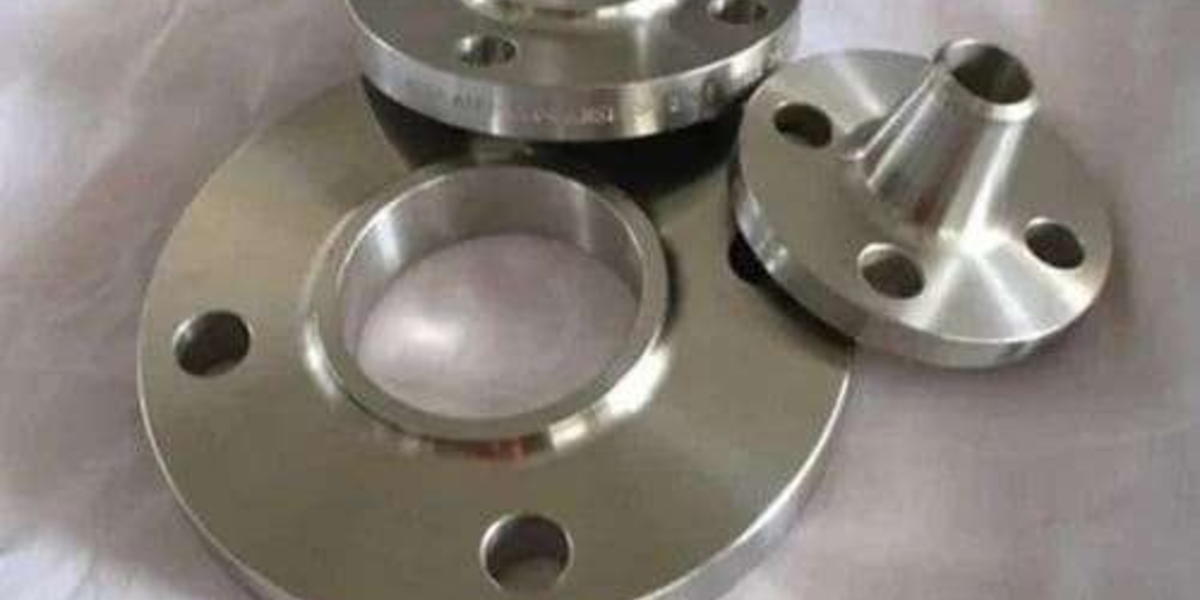
For connections that require periodic disassembly, flanged fittings provide a bolted joint that can be broken and remade reliably. Nipples — short lengths of threaded pipe — are used in low-pressure instrumentation and utility lines, though threaded connections should be avoided in cyclic pressure or high-temperature service due to their inherently lower fatigue resistance.
Choosing the wrong fitting geometry is not a minor detail. It is a design flaw that will manifest as early failure, unplanned maintenance, or a safety incident. Get the geometry right first — then worry about the grade.
Stainless Steel Fittings Grades: The Foundation of Your Selection
Material grade is where the physics of your application meets the chemistry of metallurgy. The wrong grade will corrode, crack, or simply fail to perform. The right grade will outlast the plant itself.
ASTM Stainless Steel Fittings: What the Standards Actually Tell You
The primary ASTM standard governing ASTM stainless steel fittings is ASTM A403, which covers wrought austenitic stainless steel piping fittings. This standard defines dimensional requirements, mechanical property minimums, chemical composition limits, and the testing protocols manufacturers must follow. It is the baseline quality assurance framework you should insist on for every fitting entering a pressure-containing system.
Within ASTM A403, the grade designation (WP304, WP304L, WP316, WP316L, WP321, WP347, and so on) reflects the stainless steel composition. The ‘WP’ prefix denotes wrought pipe fittings; the suffix ‘L’ indicates a low-carbon variant. Fittings can also be specified to ASTM A182 when forged rather than wrought, and ASTM A351 when cast.
Never accept fittings without a traceable mill test report (MTR). The MTR confirms that the chemical composition and mechanical properties of the specific heat from which your fittings were produced meet the ASTM specification. Without it, you have no verified basis for the claim on the tag.
ASME Stainless Steel Pipe Fittings: Dimensional Compliance and Pressure Ratings
From a dimensional standpoint, ASME stainless steel pipe fittings are governed primarily by ASME B16.9 (factory-made wrought butt-welding fittings), ASME B16.11 (forged fittings — socket weld and threaded), ASME B16.28 (short radius elbows and returns), and ASME B16.3 (malleable iron threaded fittings, though stainless variants follow the same dimensional template).
Compliance with ASME B16.9 ensures that a fitting from one manufacturer will dimensionally mate with pipe and fittings from another — critical when sourcing across multiple suppliers on large projects. It also defines the pressure-temperature ratings through reference to the base material’s ASTM specification, so the two standards work in tandem rather than in isolation.
304 vs 316 Stainless Steel Pipe Fittings: The Decision That Defines Service Life
If there is one comparison that comes up more often than any other in stainless steel specification, it is this one. And the answer is rarely as simple as ‘just use 316 to be safe.’
| Property | 304 / 304L Stainless Steel | 316 / 316L Stainless Steel |
| Chromium content | ~18% | ~16–18% |
| Nickel content | ~8% | ~10–14% |
| Molybdenum content | None | 2–3% |
| Chloride resistance | Moderate | Significantly higher |
| General corrosion | Excellent | Excellent |
| Typical cost premium | Baseline | ~20–30% higher |
| Best for | Food, pharma, mild chemical | Marine, seawater, chemical processing |
| Weld-preferred grade | 304L | 316L |
The chemistry is what drives the performance difference. 316 stainless steel pipe fittings contain 2–3% molybdenum, which dramatically enhances resistance to pitting and crevice corrosion in chloride-containing environments — seawater, brine solutions, hydrochloric acid, and many cleaning agents used in food and pharmaceutical processing.
304 stainless steel pipe fittings — or more precisely 304L when welding is involved — provide outstanding general corrosion resistance at a lower cost and are entirely appropriate for a wide range of indoor, food-grade, pharmaceutical, and mildly corrosive chemical applications. Specifying 316 across the board where 304 is sufficient is not conservative engineering. It is unnecessary cost.
The practical rule: if your process fluid contains chlorides at any meaningful concentration, or if your fitting will be exposed to seawater or marine atmospheres, specify 316 or 316L. For general service, potable water, steam, food contact, and atmospheric exposure in non-coastal environments, 304L is the right call.
Ask yourself this: would your fitting spend its life in a freshwater dairy or a coastal petrochemical terminal? The answer tells you whether you need 304 or 316 — and getting this wrong in either direction costs you money.
Your Stainless Steel Pipe Fittings Selection Guide: The Non-Negotiable Checklist
Theory is useful. But what you need when facing a purchase order or a specification sheet is a structured decision framework. Here is the stainless steel pipe fittings selection guide that experienced engineers actually use — not the sanitised version that lives in brochures.
Step 1: Define Your Service Conditions Precisely
Operating pressure, design temperature, thermal cycling frequency, and upset conditions (maximum transient pressure and temperature) must all be documented before a single fitting is specified. Design codes such as ASME B31.3 (Process Piping) define the calculation methodology for determining allowable pressure based on material and wall thickness — follow them, do not estimate.
Step 2: Characterise the Process Fluid Completely
What is it? What is its pH? Does it contain chlorides, sulphur compounds, or oxidising agents? What is the flow velocity, and does it carry particulates? Corrosion-resistant pipe fittings are only corrosion-resistant relative to specific chemical environments. A fitting that performs perfectly in dilute sulphuric acid may be entirely unsuitable for concentrated hydrochloric acid. If you do not know the fluid chemistry, you cannot make a valid material selection — full stop.
Step 3: Match the End Connection Type to the Installation
Butt-weld fittings are the default for most process piping in ASME B31.3 service — they provide the highest integrity, fatigue resistance, and cleanliness of bore. Socket weld fittings are appropriate for small-bore, high-pressure lines (typically up to NPS 2). Threaded connections should be limited to non-corrosive, low-pressure utility services. Never specify threaded connections in services involving hydrogen, hazardous chemicals, or cyclic pressure without explicit code justification.
Step 4: Confirm Dimensional Compliance
All fittings must be dimensionally compatible with the connected piping — same nominal pipe size (NPS or DN), same schedule, and same facing standard. ASME stainless steel pipe fittings to B16.9 are dimensionally standardised, but this does not eliminate the need to verify bore compatibility with the pipe schedule. A Schedule 80 pipe has a smaller bore than a Schedule 40 pipe of the same NPS, and an off-the-shelf fitting bored to Schedule 40 dimensions will create a mismatch — and a stress riser — at the weld.
Step 5: Verify Heat Traceability and Certification
Every fitting entering a safety-critical or code-governed system must be accompanied by an MTR traceable to the heat of steel from which it was manufactured. The MTR must confirm chemical composition, mechanical test results (tensile, yield, elongation, and impact if required), and heat treatment condition. Accepting fittings without this documentation is a quality and liability risk that no responsible engineering organisation should take.
Step 6: Consider Surface Finish Requirements
In pharmaceutical, biotechnology, and food and beverage applications, surface finish is not cosmetic — it is functional. Rough internal surfaces harbour biofilms, resist effective cleaning, and compromise product purity. The relevant standards (3-A Sanitary Standards, ASME BPE for bioprocessing equipment) specify maximum average roughness (Ra) values, typically in the 0.25–0.8 micron range for product-contact surfaces. Confirm that your supplier can provide the required finish with certified measurement data.
Corrosion-Resistant Pipe Fittings: Beyond the Grade Designation
Specifying the right grade is necessary but not always sufficient. Several factors beyond the base alloy designation influence the real-world corrosion performance of industrial stainless steel pipe fittings — and experienced specifiers know to check all of them.
Sensitisation and the Case for Low-Carbon Grades
When austenitic stainless steel is exposed to temperatures between approximately 425°C and 870°C — which happens routinely during welding — carbon migrates to grain boundaries and combines with chromium, forming chromium carbides. This depletes the surrounding area of corrosion-resistant chromium and creates zones that are susceptible to intergranular corrosion. The solution is straightforward: specify 304L or 316L stainless steel pipe fittings for any application where the fitting will be welded during installation. The low-carbon chemistry keeps sensitisation risk negligible without requiring post-weld heat treatment in most circumstances.
Chloride Stress Corrosion Cracking — The Silent Killer
Austenitic stainless steels, despite their excellent general corrosion resistance, are susceptible to chloride-induced stress corrosion cracking (SCC) under specific conditions: the simultaneous presence of tensile stress, chlorides above a threshold concentration, and elevated temperature (typically above 50°C). SCC can cause rapid, catastrophic failure with little visible warning. In chloride-rich environments at elevated temperature, consider duplex stainless steel grades (such as UNS S31803 or S32205) or higher-alloy austenitic grades, which offer substantially improved SCC resistance.
Crevice Corrosion at Threaded and Gasketed Joints
Crevices created by threaded connections, gasket interfaces, and poorly fitted socket weld assemblies trap stagnant fluid and create localised low-oxygen zones where the passive film breaks down and pitting initiates. In chloride-containing service, this can progress rapidly. Minimise threaded connections in aggressive environments, ensure socket weld gaps are within ASME code tolerances, and select gasket materials compatible with the process fluid.
Corrosion resistance is not a property of the grade alone. It is the product of the grade, the fabrication quality, the surface condition, the joint geometry, and the operating environment — considered together.
Working With a Reliable Supplier: What to Look for and Why It Matters
Even a perfectly executed specification can be undermined by poor supply chain management. In a market where substandard or misdeclared material is a documented problem, the quality systems and traceability practices of your supplier are as important as the grade you specify.
A credible supplier of industrial stainless steel pipe fittings will provide full MTR traceability to the originating heat of steel, third-party inspection certification where required, dimensional inspection reports confirming compliance with the relevant ASME standard, and clear documentation of the supply chain from mill to despatch. They will not hesitate to answer technical questions about material composition, mechanical properties, or applicable standards — because they know their product and can stand behind it.
At Arham Alloys, this is not a claim — it is the foundation of how we operate. Our state-of-the-art production facilities are supported by stringent quality assurance protocols at every stage of the manufacturing process. We source raw materials that comply with international composition standards, and our controlled cold-drawing operations deliver the precise dimensions and mechanical properties that modern industrial applications demand.
We serve clients across a wide range of delivery states and application requirements — from soft-annealed material for forming-intensive applications to product cold-drawn to specific tensile specifications for structural and pressure-containing service. Our comprehensive size range allows manufacturers and EPC contractors to consolidate stainless steel sourcing with a single, reliable partner — reducing procurement complexity without compromising on quality or regulatory compliance.
The Bottom Line: Selection is a Technical Decision, Not a Purchasing Exercise
Every stainless steel pipe fitting that enters an industrial system is a pressure-containing component on which the safety of personnel, the integrity of the process, and the reputation of the engineering organisation all depend. That is not hyperbole — it is the reality of working with process fluids at elevated temperature and pressure.
The stainless steel pipe fittings selection guide in this article is not a shortcut — it is a framework for structured, defensible decision-making. Define your service conditions. Characterise the fluid. Select the right type. Specify the correct stainless steel fittings grade — whether that is 304L for general service or 316L for chloride exposure. Insist on ASTM and ASME compliance. Demand full traceability. And work with a supplier whose quality systems you have verified, not assumed.
The companies that get this right do not talk about fitting failures at post-incident reviews. They are too busy running their plants.
About Arham Alloys
Arham Alloys is a manufacturer and supplier of precision stainless steel and alloy products for demanding industrial applications worldwide. Combining state-of-the-art production capabilities with rigorous quality assurance protocols, we deliver material that meets international composition and dimensional standards with full heat traceability. Our expertise spans multiple delivery states — annealed, light-drawn, and cold-drawn to specific tensile properties — enabling customers to source their complete stainless steel requirements from a single, trusted partner. For technical enquiries or product specifications, contact our team directly.
FAQs on Stainless Steel Pipe Fittings for Industrial Use
What Are Stainless Steel Pipe Fittings for Industrial Use?
Stainless steel pipe fittings for industrial use are components that connect, redirect, or terminate piping systems in industries such as chemical, pharmaceutical, oil & gas, and manufacturing. They include elbows, tees, reducers, couplings, and flanges designed to withstand high pressure, temperature, and corrosive environments.
Why Choose Stainless Steel Pipe Fittings for Industrial Use?
Industries rely on stainless steel pipe fittings because of their superior corrosion resistance, high strength, and long-lasting durability. Stainless steel ensures minimal maintenance and reduces downtime in industrial pipelines.
What Types of Stainless Steel Pipe Fittings Are Available?
We offer a comprehensive range of stainless steel pipe fittings for industrial use, including 90° and 45° elbows, tees for branch connections, and reducers to adjust pipe diameters.