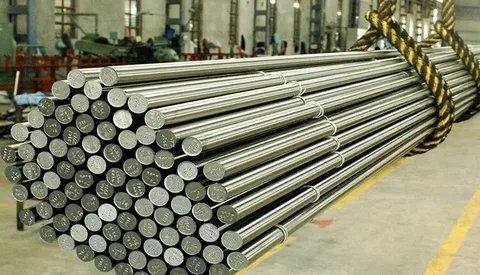
If you work in fabrication, you already know that your final product is only as good as the material you begin with. And when the application demands corrosion resistance, mechanical strength, and dimensional consistency all at once, stainless steel round bars consistently rise to the top of the shortlist. This blog breaks down everything an experienced fabricator, engineer, or procurement professional needs to understand — from core properties and grade selection to specifications and real-world applications.
What Makes Stainless Steel Round Bars the Fabricator’s First Choice?
Walk into any serious fabrication facility and you will find stainless steel round bars in the inventory. Not by accident — by design. These solid cylindrical sections are produced from carefully formulated stainless steel alloys and deliver a combination of properties that few materials can replicate across such a diverse range of applications.
The reason fabricators keep coming back to stainless steel round bars is straightforward: reliability. Whether you are machining a valve stem, turning a pump shaft, or producing threaded fasteners for offshore installations, the material performs. It holds its dimensions. It resists the environment. It machines predictably. And when it is sourced from a manufacturer who controls their process from raw material to finished bar — it delivers consistent results batch after batch.
Key Properties of Stainless Steel Round Bars Every Fabricator Should Know
Corrosion Resistance That Actually Holds Up in the Field
The most discussed property of stainless steel round bars is corrosion resistance — and for good reason. The chromium content in stainless steel, typically no less than 10.5% by mass, reacts with atmospheric oxygen to form a thin, self-repairing passive oxide layer on the surface. This invisible film is what separates stainless steel from ordinary carbon steel in environments involving moisture, chemicals, salt, or elevated humidity.
What makes this particularly valuable in fabrication is the self-healing nature of the layer. Scratch the surface during machining or fabrication, and the passive layer reforms on its own when exposed to oxygen. For industries like marine, chemical processing, and food manufacturing, this is not a nice-to-have — it is a non-negotiable requirement.
Mechanical Strength That Doesn’t Compromise on Precision
One of the properties of stainless steel round bars that experienced fabricators appreciate most is the balance between strength and workability. Hot-rolled bars provide solid baseline tensile and yield strength for general structural applications. Cold-drawn bars take that a step further — the cold-drawing process work-hardens the material, improving both strength and dimensional tolerance simultaneously.
For fabricators producing high-tolerance components like shafts, spindles, or precision-machined fittings, this matters enormously. You get a bar that is closer to net shape, requires less machining stock removal, and delivers consistent mechanical properties along its entire length.
Temperature Performance Across the Full Range
Industrial stainless steel round bars — particularly the austenitic grades — retain their mechanical integrity from cryogenic temperatures down to -196°C all the way up to service temperatures exceeding 800°C, depending on the grade. This thermal versatility makes them indispensable in heat exchangers, pressure vessel components, and high-temperature furnace hardware where ordinary steel would either become brittle or lose structural integrity.
Surface Finish, Hygiene, and Cleanability
This is where stainless steel round bars genuinely outclass most alternatives. The non-porous, smooth surface of a properly finished stainless bar resists bacterial colonization and can be sterilized repeatedly without surface degradation. For pharmaceutical equipment manufacturers and food processing fabricators, this property is what drives grade and finish selection as much as any mechanical consideration.
Stainless Steel Round Bar Grades — Choosing the Right Alloy for the Job
Here is where most fabrication decisions either get made correctly or where costly mistakes begin.
Not all stainless steel round bar grades perform equally in every environment. Understanding grade differences before procurement — not after the first batch of components fails inspection — is what separates experienced fabricators from the rest.
Grade 304 — The Workhorse of General Fabrication
Grade 304 stainless steel round bars, with their 18% chromium and 8% nickel composition, are the most widely used in the industry. They offer excellent corrosion resistance in most atmospheric and mildly corrosive environments, weld cleanly, machine reasonably well, and are competitively priced relative to higher-alloy grades.
For applications in food processing equipment, kitchen hardware, chemical storage containers, and general structural fabrication, 304 is typically the logical starting point. If your operating environment does not involve prolonged chloride exposure or aggressive chemical media, 304 will serve you well.
Grade 316 — When the Environment Demands More
The moment chlorides enter the picture — whether from seawater, cleaning chemicals, or coastal atmospheric exposure — Grade 316 becomes the grade of choice. The addition of 2–3% molybdenum to the standard 304 composition significantly increases resistance to chloride-induced pitting and crevice corrosion, which is the specific failure mode that destroys 304 in marine and chemical environments.
304 vs 316 Stainless Steel Round Bars — The Decision That Matters
The 304 vs 316 stainless steel round bars debate is one of the most common procurement questions in fabrication, and the answer is always environment-driven. If your components will operate in a chloride-rich environment — offshore platforms, coastal installations, pharmaceutical processing lines using chlorine-based sanitizers, or seawater cooling systems — specify 316. If the environment is general atmospheric or mildly corrosive, 304 delivers the performance you need at a more favorable cost point.
Neither grade is universally superior. The superior grade is the one correctly matched to the application.
Grade 303 — When Machinability Is the Priority
For high-volume CNC machining operations where production speed and surface finish quality are the primary drivers, Grade 303 stainless steel round bars are purpose-built for the job. The added sulfur content improves chip formation and reduces tool wear significantly. The trade-off is reduced weldability and marginally lower corrosion resistance — which is acceptable in components that will not be welded and will operate in non-aggressive environments.
Precipitation-Hardened and Martensitic Grades
For applications demanding significantly higher strength than austenitic grades can provide, martensitic grades like 410 and 416 and precipitation-hardened grades like 17-4 PH enter the equation. These stainless steel round bar grades are machined, heat-treated, and used in aerospace hardware, high-performance valve components, and defense applications where mechanical performance requirements exceed what standard austenitic alloys can deliver.
Uses of Stainless Steel Round Bars in Fabrication — Real Applications, Real Demands
Shafts, Axles, and Rotating Components
The most prevalent use of stainless steel round bars in fabrication is in the production of shafts and rotating components. Pump shafts, conveyor axles, agitator shafts in chemical reactors — all of these demand consistent diameter tolerances, good surface finish, and a material that won’t corrode in service. Cold-drawn stainless round bars satisfy all three requirements directly off the bar, minimizing machining time and material waste.
Fasteners, Bolts, and Threaded Components
Stainless steel round bars serve as the primary feedstock for producing fasteners in grades 304, 316, and 303. The material’s ductility enables cold heading and thread rolling without cracking, while its corrosion resistance ensures joint integrity in demanding service environments — including marine, offshore, and industrial chemical exposure.
Valve Bodies, Stems, and Precision Fittings
The oil and gas, petrochemical, and water treatment sectors machine valve components directly from industrial stainless steel round bars. These components operate under fluctuating pressures, elevated temperatures, and aggressive process media — conditions that demand consistent material properties throughout the entire bar cross-section.
Medical Devices and Pharmaceutical Equipment
Surgical instruments, orthopedic implants, and pharmaceutical processing components are manufactured from stainless steel round bars that meet exacting biocompatibility and cleanliness requirements. The combination of corrosion resistance, surface finish capability, and sterilization compatibility makes stainless round bars the standard choice in these life-critical manufacturing sectors.
Architectural and Structural Fabrication
Beyond industrial applications, stainless steel round bars are widely used in architectural handrails, balustrades, structural supports, and decorative hardware. Their aesthetic appearance, structural reliability, and low maintenance profile make them equally at home in a chemical plant and a premium commercial building facade.
Stainless Steel Bar Specifications and ASTM Standards Fabricators Must Reference
Understanding stainless steel bar specifications is non-negotiable for any fabricator working in regulated industries. The key ASTM stainless steel round bar standards include ASTM A276, which covers bars and shapes in annealed or cold-worked condition for general fabrication; ASTM A479, which governs bars intended for boilers, pressure vessels, and pressure-retaining systems; and ASTM A484, which establishes general requirements including dimensional tolerances and surface condition.
These ASTM stainless steel round bars standards define not only chemical composition and mechanical property requirements but also permissible dimensional variations, testing methods, and certification requirements. For fabricators supplying components to industries governed by ASME pressure vessel codes, FDA regulations, or ISO quality management systems, ensuring material compliance with the correct ASTM standard is a foundational step — not an afterthought.
Mill test reports, or material test certificates, should accompany every order of stainless steel round bars and should be reviewed against the applicable specification before the bar ever reaches the shop floor.
The Bottom Line
Stainless steel round bars are not complicated. But selecting the wrong grade, sourcing from a supplier without process control, or overlooking the applicable ASTM specification can turn a straightforward fabrication job into an expensive problem.
The properties of stainless steel round bars — corrosion resistance, mechanical strength, temperature performance, and surface quality — make them one of the most capable and versatile materials available to fabricators today. The uses of stainless steel round bars in fabrication span virtually every demanding industry on the planet. And the grades and specifications available give fabricators the ability to match material to application with precision.
At Arham Alloys, we supply stainless steel round bars through a controlled cold-drawing process backed by stringent quality assurance and internationally compliant raw material selection. We offer multiple delivery conditions — soft-annealed, light-drawn, and cold-drawn to specific tensile requirements — across a comprehensive range of diameters. One supplier, every specification, consistent quality.
Because in fabrication, the material you start with determines everything that follows.
Frequently Asked Questions: Key Properties and Uses of Stainless Steel Round Bars in Fabrication
What Are Stainless Steel Round Bars and Why Are They Important in Fabrication?
Stainless steel round bars are solid cylindrical metal sections produced from various grades of stainless steel alloy. They serve as fundamental raw materials across a wide range of fabrication industries, including aerospace, petrochemical, marine, construction, and food processing. Their importance in fabrication stems from a unique combination of mechanical strength, corrosion resistance, and versatility that few other materials can match.
Unlike hollow sections or structural profiles, stainless steel round bars offer uniform cross-sectional integrity, making them ideal for precision machining, forging, and load-bearing applications. Fabricators rely on them for producing shafts, fasteners, valves, pins, studs, and other critical components where dimensional accuracy and material consistency are non-negotiable.
What Are the Key Properties of Stainless Steel Round Bars?
Corrosion Resistance
Perhaps the most recognized property of stainless steel round bars is their exceptional resistance to corrosion. This is achieved through the presence of chromium — typically a minimum of 10.5% by mass — which reacts with oxygen to form a passive oxide layer on the surface. This self-repairing film protects the base metal from rust, oxidation, and chemical attack even in harsh environments. In applications involving saltwater exposure, chemical processing, or high humidity, this property is indispensable.
Mechanical Strength and Hardness
Stainless steel round bars exhibit impressive tensile strength, yield strength, and hardness, depending on the grade and processing method. Cold-drawn stainless steel round bars, in particular, demonstrate enhanced mechanical properties compared to their hot-rolled counterparts due to work hardening during the drawing process. This makes them suitable for high-stress applications where structural failure is not an option.
Temperature Resistance
Industrial stainless steel round bars retain their mechanical integrity across a broad temperature spectrum. Austenitic grades, such as 304 and 316, perform reliably at both cryogenic temperatures and elevated heat conditions, making them valuable in heat exchangers, furnace components, and pressure vessels.
Machinability and Formability
While stainless steel is harder to machine than mild steel, the right grade selection and tooling setup make stainless steel round bars highly workable. Free-machining grades like 303 are specifically formulated to improve chip formation and reduce tool wear. For fabricators, this translates to efficient production cycles without sacrificing component quality.
Surface Finish and Aesthetic Appeal
Stainless steel round bars are available in multiple surface conditions — from the matte appearance of hot-rolled bars to the bright, smooth finish of cold-drawn or centerless-ground bars. This range of finishes makes them suitable not only for structural and industrial purposes but also for architectural and decorative applications.
H3: Hygiene and Cleanability
The non-porous, smooth surface of stainless steel round bars resists bacterial growth and is easy to sterilize. This property is critical in the food and beverage industry, pharmaceutical manufacturing, and medical device fabrication, where hygiene standards are rigorously enforced.
What Are the Most Common Uses of Stainless Steel Round Bars in Fabrication?
Shaft and Axle Manufacturing
One of the most widespread uses of stainless steel round bars in fabrication is in the production of shafts and axles. The combination of high tensile strength, torsional resistance, and corrosion resistance makes stainless round bars the preferred choice for pump shafts, conveyor axles, and drive spindles in industries where exposure to moisture or chemicals is a daily reality.
Fastener and Bolt Production
Fabricators use stainless steel round bars as the starting stock for producing bolts, nuts, studs, and other threaded fasteners. The material’s ductility allows for cold heading and thread rolling without cracking, while its corrosion resistance ensures long-term joint integrity in outdoor and marine applications.
Valve and Fitting Components
The oil and gas, chemical, and water treatment industries rely heavily on stainless steel round bars for machining valve bodies, stems, seats, and fittings. These components must withstand fluctuating pressures, aggressive media, and extreme temperatures — conditions that stainless steel round bars are engineered to handle.
Architectural and Structural Fabrication
Industrial stainless steel round bars find extensive use in architectural railings, handrails, balustrades, and structural supports. Their aesthetic appeal, combined with their structural performance and low maintenance requirements, makes them a favored material among architects and structural engineers.
Medical and Pharmaceutical Equipment
Surgical instruments, orthopedic implants, and pharmaceutical processing equipment frequently incorporate stainless steel round bars. The biocompatibility of certain grades, combined with the material’s resistance to sterilization processes, makes it uniquely suited to these demanding applications.
Automotive and Aerospace Components
From suspension components to turbine hardware, the uses of stainless steel round bars in fabrication extend into high-performance engineering sectors. The material’s strength-to-weight advantages and fatigue resistance make it a dependable choice in applications where component failure carries serious consequences.
What Are the Main Stainless Steel Round Bar Grades and How Do They Differ?
Grade 304 Stainless Steel Round Bars
Grade 304 is the most widely used of all stainless steel round bar grades. Composed of 18% chromium and 8% nickel, it offers excellent corrosion resistance in a broad range of environments and is well-suited for general fabrication, food processing equipment, kitchen hardware, and chemical containers. It is cost-effective, readily available, and easy to weld, making it a default choice for many fabricators when project conditions do not demand a more specialized alloy.
Grade 316 Stainless Steel Round Bars
Grade 316 builds upon the composition of 304 by adding 2–3% molybdenum, which significantly improves resistance to chloride-induced corrosion and pitting. This makes 316 stainless steel round bars the preferred choice for marine environments, pharmaceutical manufacturing, coastal infrastructure, and chemical processing applications where chlorides or harsh acids are present.
304 vs 316 Stainless Steel Round Bars — Which Should You Choose?
The choice between 304 vs 316 stainless steel round bars ultimately comes down to the operating environment and budget. If the application involves prolonged exposure to saltwater, chlorine solutions, or aggressive chemicals, the molybdenum content in 316 provides a critical edge in longevity. For general-purpose fabrication where such exposure is minimal, 304 offers comparable performance at a lower cost. Fabricators should consult material specifications and service condition data before making a final grade selection.
Grade 303 Stainless Steel Round Bars
Grade 303 is a free-machining variant that contains added sulfur to improve machinability. It is particularly useful in high-volume CNC machining operations where production speed and surface finish are prioritized. However, its weldability and corrosion resistance are slightly lower than 304, so it is typically chosen when the finished component will not be welded.
Grade 410 and 416 Stainless Steel Round Bars
These martensitic grades offer higher hardness and strength than austenitic grades but with reduced corrosion resistance. They are commonly used in cutlery, pump shafts, and valve components where wear resistance takes precedence over corrosion protection.
Grade 17-4 PH Stainless Steel Round Bars
17-4 PH (precipitation-hardened) stainless steel round bars are used in aerospace, defense, and high-performance mechanical components where exceptional strength and moderate corrosion resistance are required simultaneously. They can be heat-treated to achieve a range of mechanical properties, giving fabricators greater control over final component performance.
What Are the Standard Stainless Steel Bar Specifications Fabricators Should Know?
ASTM Stainless Steel Round Bars — Key Standards
ASTM stainless steel round bars are governed by a set of internationally recognized standards that define chemical composition, mechanical properties, dimensional tolerances, and testing requirements. The most commonly referenced ASTM specifications include:
ASTM A276 covers standard stainless steel bar and shapes in the annealed, cold-worked, or hot-finished condition. It is one of the most frequently cited standards for stainless steel round bars used in general fabrication.
ASTM A479 applies to stainless steel bars and shapes intended for use in boilers, pressure vessels, and related pressure-retaining components, making it essential for fabricators in the energy and chemical sectors.
ASTM A484 establishes the general requirements applicable to stainless and heat-resisting steel bars, billets, and forgings, including permissible variations in dimensions and finish.
ASTM A582 covers free-machining stainless steel bars, relevant to Grade 303 and 416 applications where machinability is a priority.
Understanding which ASTM stainless steel round bar standard applies to your application is critical to ensuring code compliance, especially in industries governed by regulatory bodies such as ASME, FDA, or ISO.
Dimensional Tolerances and Surface Conditions
Stainless steel bar specifications also define allowable diameter tolerances, straightness, and ovality. Hot-rolled bars typically carry broader dimensional tolerances, while cold-drawn and centerless-ground bars are held to tighter precision standards. Fabricators requiring close-tolerance shafts or precision-machined components should specify the appropriate delivery condition — whether hot-rolled annealed (HRA), cold-drawn (CD), or turned and polished (T&P) — to minimize downstream machining allowances.
How Are Industrial Stainless Steel Round Bars Manufactured?
Hot Rolling and Cold Drawing
The production of industrial stainless steel round bars typically begins with hot rolling, where heated billets are passed through a series of rolls to achieve the approximate diameter and straightness required. For applications demanding tighter tolerances and improved surface finish, bars undergo cold drawing — a process in which the bar is pulled through a die at room temperature to reduce its diameter, improve dimensional accuracy, and increase mechanical strength through work hardening.
At Arham Alloys, this process is executed using state-of-the-art production facilities combined with stringent quality assurance protocols. Manufacturing begins with carefully selected raw materials that meet international composition standards. Through controlled cold-drawing operations, the precise dimensions and mechanical properties demanded by modern industries are consistently achieved. Whether a project calls for soft-annealed bar for easy forming, light-drawn bar for moderate strength applications, or material cold-drawn to specific tensile properties, Arham Alloys can deliver the exact specification required — across a comprehensive range of diameters, enabling manufacturers to source all their requirements from a single, reliable supplier.
Heat Treatment
Depending on the grade and intended application, stainless steel round bars may undergo annealing, solution treatment, or precipitation hardening after forming. Annealing relieves internal stresses and restores corrosion resistance in austenitic grades, while solution treatment is critical for duplex and precipitation-hardened grades to achieve the desired microstructure.
Surface Finishing and Inspection
After forming and heat treatment, industrial stainless steel round bars are subjected to dimensional inspection, surface examination, and mechanical testing. Non-destructive testing methods such as ultrasonic inspection may be applied for critical applications. Surface finishing — including centerless grinding, polishing, or passivation — ensures the bar meets both dimensional and cleanliness requirements before dispatch.
How Should Fabricators Select and Store Stainless Steel Round Bars?
Selecting the Right Grade and Specification
Grade selection should be driven by the operating environment, mechanical load requirements, machinability needs, and applicable standards. Fabricators should reference the relevant ASTM stainless steel round bar standard and verify that the material certification (mill test report) confirms compliance with specified chemical and mechanical properties.
Handling and Storage Best Practices
Stainless steel round bars should be stored separately from carbon steel materials to prevent contact contamination, which can introduce iron particles onto the surface and initiate rust. Storage areas should be dry, clean, and preferably covered. Bars should be lifted and moved using non-metallic slings or dedicated stainless steel handling equipment to avoid surface damage that could compromise corrosion resistance.
Why Choose Arham Alloys for Stainless Steel Round Bars?
Arham Alloys combines technical expertise with advanced manufacturing capability to supply stainless steel round bars that consistently meet the demands of precision fabrication. The company’s controlled cold-drawing process, rigorous quality assurance protocols, and commitment to sourcing raw materials that conform to international standards ensure that every bar dispatched is dimensionally accurate, mechanically sound, and fully traceable.
With a comprehensive range of diameters and delivery conditions — from soft-annealed to cold-drawn to specific tensile requirements — Arham Alloys serves as a single-source supplier for fabricators across industries. Whether the requirement is a standard ASTM stainless steel round bar for general fabrication or a close-tolerance bar for a critical aerospace or pharmaceutical application, Arham Alloys has the capability and the inventory to respond with speed and precision.
FAQs on Stainless Steel Round Bars
What Are Stainless Steel Round Bars?
Stainless steel round bars are cylindrical metal rods widely used in industrial manufacturing, construction, automotive, and engineering applications. These bars are known for their excellent corrosion resistance, strength, and durability, making them suitable for use in harsh environments where structural integrity is critical.
Why Are Stainless Steel Round Bars Used in Industrial Applications?
Stainless steel round bars are highly resistant to rust and corrosion, which makes them ideal for industries exposed to moisture, chemicals, or extreme temperatures.
What Are the Different Grades of Stainless Steel Round Bars?
Stainless steel round bars are available in various grades such as 304, 316, 410, and 420, each offering unique properties suitable for different industrial needs.
How Are Stainless Steel Round Bars Manufactured?
The manufacturing process begins with selecting high-quality raw materials that meet international composition standards.The manufacturing process begins with selecting high-quality raw materials that meet international composition standards.